
Secondary surgery
for trans men
Female-to-male
First consultation free
Secondary surgery for trans men
Female-to-male
Secondary surgery
FTM revision surgery after thoracic masculinisation
MADRID | ZURICH
Secondary surgery for trans men aims to correct or improve the results obtained after previous gender affirming interventions. In the context of transition FTM (Female-to-Male), these surgeries are mainly performed after mastectomy or thoracic masculinisation surgery.
In some cases, the initial result may require additional adjustments to improve the contour of the chest, correct asymmetries or perfect the position of the nipple-areola complex. Revision surgeries optimise both the aesthetic result and the functionality of the breast.
These types of procedures often combine reconstructive and aesthetic techniques to achieve a more aesthetically pleasing more natural and balanced male chest contours. Surgical planning is always individualised, taking into account the patient's anatomy, existing scars and expectations of the final result.
Dr. Richard Fakin has extensive experience in revision surgery within the field of gender affirmation surgery, dealing with complex cases of secondary surgery following previously performed procedures.
-
DURATION 3-5 hours (including breast augmentation)
-
DISCHARGE FROM THE CLINIC 1 week
-
BACK TO WORK 4-6 weeks
-
DURATION 3-5 hours (including breast augmentation)
-
DISCHARGE FROM THE CLINIC 1 week
-
BACK TO WORK 4-6 weeks
-
SUITABLE FOR SOCIETY 14 days
-
ANESTHESIA General
-
FULL RECOVERY 2-3 months
-
SUITABLE FOR SOCIETY 14 days
-
ANESTHESIA General
-
FULL RECOVERY 2-3 months
Instructions
When secondary FTM surgery may be necessary
Secondary surgery may be considered when the result of a previous mastectomy or thoracic surgery does not fully meet the patient's aesthetic or functional expectations. Depending on the case, these interventions may help to:
- correcting irregularities in the contour of the thorax
- remove residual glandular tissue
- improving pectoral symmetry
- optimising the position of the nipple-areola complex
- check previous scars
The indication for surgery is established after an individualised medical assessment, in which the result of the previous operation and the patient's anatomical characteristics are analysed.
Surgical techniques
FTM mastectomy correction
Secondary surgery after mastectomy aims to perfect the male chest contour when the initial result requires additional adjustments. Common revision techniques include:
- Removal of excess skin: In some cases there may be excess skin after the initial surgery. Skin resection improves tissue tension and optimises the contour of the breast.
- Removal of residual glandular tissue: The presence of glandular debris or subcutaneous fat can cause irregularities in the thoracic contour. Their removal allows a flatter and more defined thorax to be obtained.
- Symmetrisation of the thorax: When there are differences between the two sides of the breast, secondary surgery can correct these asymmetries to achieve a more balanced appearance.
- Liposuction of the thoracic contour: Liposuction helps to better define the edges of the breast and improve the transition between the chest and adjacent areas.
- Scar revision: Scars can be revised to improve their appearance and make them less visible.
- Correction of the nipple-areola complex: The size, shape or position of the nipple-areola complex can be modified to achieve more masculine proportions.
- Pectoral lipotransfer: In certain cases, autologous fat can be used to slightly increase pectoral volume and improve chest contour definition.
Recovery after secondary FTM surgery
Recovery after secondary surgery is usually similar to that of a primary mastectomy, although it depends on the type of correction made.
Mild swelling or discomfort may occur during the first few days, which gradually diminish. In many cases, patients can resume daily activities in about a week.
Medical follow-up allows the evolution of the healing process to be monitored and ensures that the thoracic contour adapts correctly to the modifications made.
Personalised assessment prior to secondary surgery
Before considering a secondary surgery FTM it is essential to carry out a detailed assessment of the result obtained in the previous operation. During the consultation, key aspects such as the surgical technique used, the quality of the tissues, the presence of scars or irregularities and the general contour of the chest are analysed.
This process allows the identification of areas for improvement and the definition of a surgical strategy tailored to each patient. In secondary surgery, planning is especially important, as each case has unique characteristics.
The aim is to design a personalised treatment to optimise the aesthetic result, improve symmetry and achieve a more natural and harmonious chest contour.
Experience in secondary surgery FTM
Secondary surgery in trans men requires a high level of specialisation, as it involves working on previously operated tissues and adapting the technique to each specific case.
Dr. Richard Fakin has an extensive extensive experience in gender affirmation surgery, including complex primary and secondary FTM surgery cases. His approach combines surgical precision, individualised planning and a thorough understanding of each patient's specific needs.
This type of experience is particularly relevant in secondary surgery, where the aim is not only to correct, but also to significantly improve the previous result and regain the patient's confidence in the process.
FTM secondary surgery:
Frequently Asked Questions
What is FTM secondary surgery?
It is a revision surgery performed after a mastectomy or previous thoracic surgery to improve the aesthetic or functional result.
When is secondary surgery recommended?
It may be considered when there are irregularities in the contour of the chest, asymmetries or scars that the patient wishes to improve.
Is secondary surgery more complex than primary surgery?
In many cases yes, as it involves working on previously intervened tissues.
How much time should pass between the initial surgery and a follow-up appointment?
It is usually recommended to wait several months to allow for complete healing before secondary surgery is performed.
How long does recovery take after secondary surgery?
Recovery depends on the type of correction performed, but in many cases is faster than that of the initial surgery.
Is it possible to perform several corrections in the same surgery?
Yes, in certain cases different revision techniques can be combined to optimise the final result.
Dr. Richard Fakin
international elite surgeon


At his clinics in Madrid and Zurich, Dr. Fakin leads a highly professional and committed team of specialists who share the same philosophy: to offer rigorous medical care, but friendly in its human approach. Each patient receives individualized support, from the first consultation to post-operative follow-up.
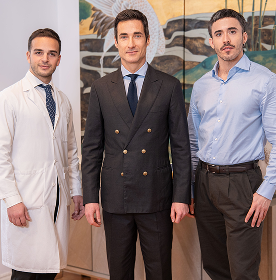
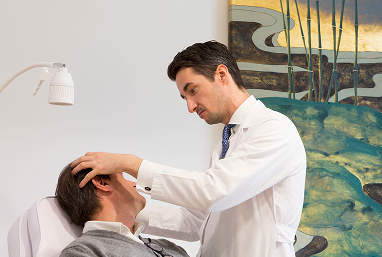
Beyond the technique, Dr. Fakin and his team's commitment is reflected in transparent, honest, and personalized care, where Each patient is treated with dedication and professionalism in all phases of the process.
Our facilities
Madrid
-
C. de Velázquez, 109, 28006 Madrid, Spain
-
madrid@drrichardfakin.com
-
+34 679 85 86 39
-
C. de Velázquez, 109, 28006 Madrid, Spain
-
madrid@drrichardfakin.com
-
+34 679 85 86 39
Zurich
-
Giesshübelstrasse 45, 8045 Zurich
-
zurich@drrichardfakin.com
-
+41 78 206 44 88
-
Giesshübelstrasse 45, 8045 Zurich
-
zurich@drrichardfakin.com
-
+41 78 206 44 88