If you're considering breast augmentation as part of your gender affirmation process, you probably have questions that go far beyond the aesthetic. And it makes perfect sense. This surgery involves medical, anatomical and personal decisions that deserve a clear and honest answer.
In this guide we explain how augmentation mammoplasty for trans women differs from conventional surgery, what you can realistically expect and how to choose the right specialist for you.
How does breast augmentation for trans women differ from conventional mammoplasty?
Breast augmentation surgery in trans women, also called MTF augmentation mammoplasty, is based on a different anatomy to that of cisgender women. This conditions both the surgical technique and the final result, and means that planning must be much more individualised.
The main anatomical differences to be taken into account are:
- Wider thoracic base, which may require larger diameter implants to achieve a harmonious projection.
- Reduced development of previous breast tissue, especially in the absence of prolonged hormone treatment
- Position and size of the nipple-areola complex, which in some cases needs to be adjusted for a more natural result.
- Increased pectoral muscle development, which has a direct influence on the implant placement technique
It's not just about choosing a size. It is about tailoring each surgical decision to the specific anatomy of each patient.
Differences between breast augmentation in trans and cis women
Although both procedures aim to improve the volume and shape of the breast, surgical planning may be different for transgender women and cisgender women. In the case of transgender women, the anatomical starting point often requires a specially individualised assessment to achieve a harmonious, natural and proportionate result.
| Aspect | Trans women | Cis women |
|---|---|---|
| Chest | It is usually wider | Generally narrower |
| Previous breast tissue | May be lower, especially in the absence of prolonged hormone use | There is usually more underlying breast tissue |
| Planning | Requires highly customised adaptation to thoracic anatomy | It usually follows the most common criteria for cosmetic mammoplasty |
| Implants | May require larger diameter or projection to achieve a balanced silhouette. | The choice depends on the desired volume and the starting anatomy. |
| Target | Thoracic feminisation and body harmony in the process of gender affirmation | Volume enhancement, aesthetic improvement or correction of asymmetries |
This comparison does not mean that one surgery is better or more complex than another, but that each patient needs specific planning. Therefore, in the breast augmentation in trans women it is especially important to have a surgeon with experience in gender affirmation surgery.
Is it necessary to take hormones before surgery?
No. In Spain it is not compulsory to have undergone hormone treatment before having a breast augmentation as part of gender affirmation. However, in many cases it is recommended. Hormone therapy with oestrogen can:
- Encourage the development of natural breast tissue before surgery
- Improving the quality and elasticity of the skin
- Contributing to a more integrated and natural result after surgery
Some patients decide to have surgery without starting hormone therapy, while others wait several months to optimise the result. The most important thing is to make this decision together with your endocrinologist and your plastic surgeon, assessing your specific situation.
Techniques and implants in breast augmentation MTF
The choice of technique is one of the most important factors affecting the aesthetic and functional outcome of trans breast augmentation surgery. The most common options in MTF patients include:
- Submuscular or dual plane placement, to improve implant coverage when there is little breast tissue.
- Implants with higher projection, to compensate for chest width and achieve a more feminine silhouette.
- Anatomical or round shapes, according to the characteristics of the body and the desired result
There is no universal solution. A surgeon specialised in gender reaffirmation surgery will analyse your body structure, skin elasticity and your goals to define the most appropriate planning in your case.
Results: what you can realistically expect
One of the most important aspects before you have surgery is to have honest and well-informed expectations.
Breast augmentation in trans women can achieve very natural and satisfactory results, but the final result depends largely on the starting anatomy:
- Chest width influences the separation between breasts
- The quality and elasticity of the skin determines the final shape.
- The volume chosen must be proportional to avoid an artificial or unharmonious result.
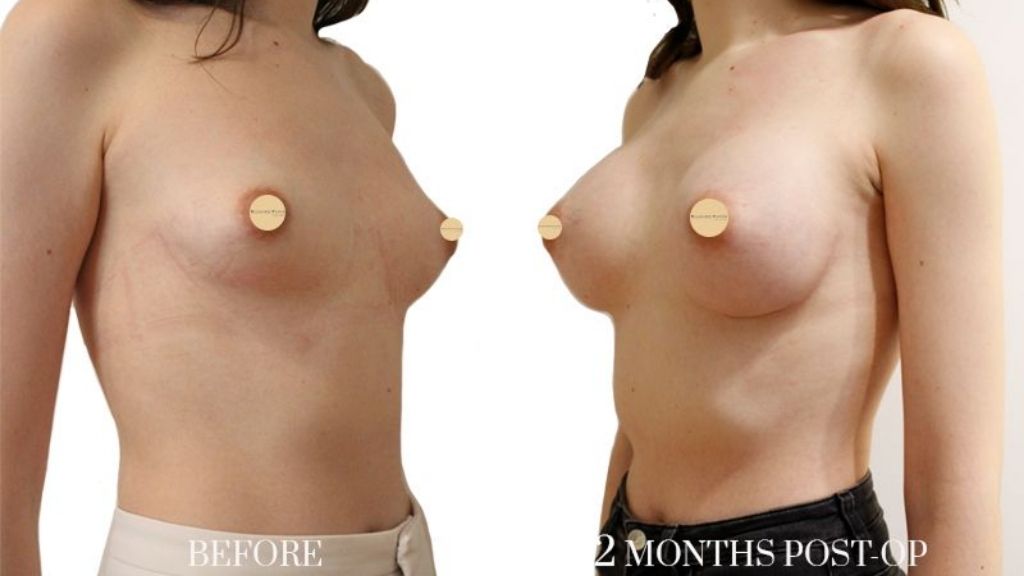
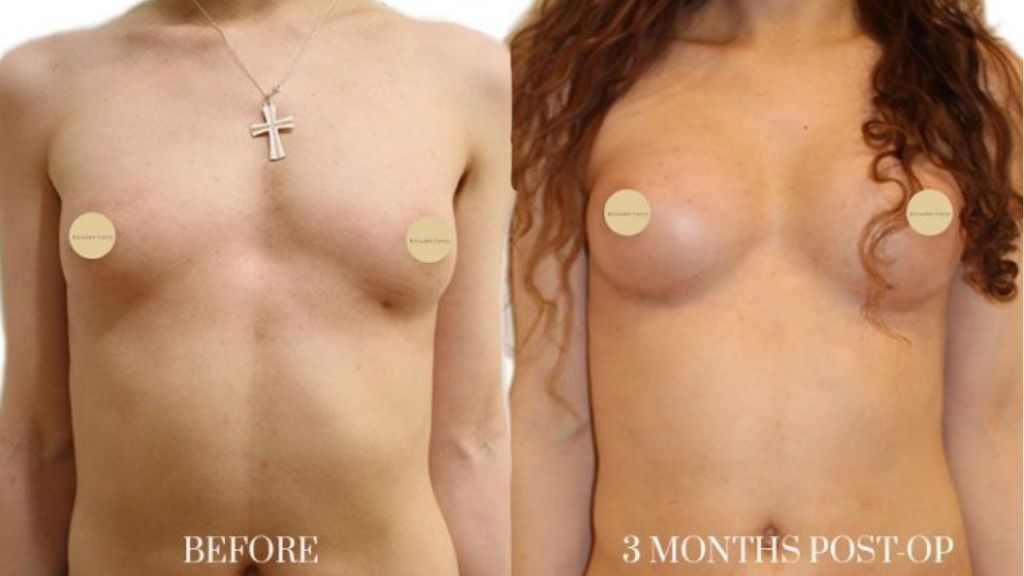
When the planning is appropriate and the surgeon has specific experience in this type of procedure, the result integrates naturally with the body, improving not only aesthetics, but also personal perception and confidence.
In some cases, breast augmentation is part of a broader process of body and facial feminisation. For this reason, many patients also value other gender-affirming procedures, such as breast augmentation. facial feminisation surgery, The aim is to harmonise features such as the forehead, nose, jaw and chin.
Recovery after breast augmentation in transgender women
Recovery is similar to that of any augmentation mammoplasty, although it may vary slightly depending on the technique used and the characteristics of each patient. In general, recovery times are as follows:
- Early days: discomfort, swelling and a feeling of pressure in the area
- First week: relative rest and limitation of arm movements
- 2-3 weeks: gradual return to daily routine
- 4-6 weeks: incorporation into physical exercise, always under medical indication
The use of a compression garment and strict adherence to the surgeon's instructions are essential for good healing and an optimal result.
Risks and possible complications
As with any surgical procedure, augmentation mammoplasty in trans women carries certain risks that are important to be aware of before making a decision:
- Postoperative infection
- Capsular contracture
- Asymmetries in the outcome
- Implant displacement
The likelihood of complications is significantly reduced when the surgery is performed by a specialist with specific experience in gender affirming surgery and with a clear pre- and post-operative follow-up protocol.
How to choose a breast augmentation surgeon for transgender women
This is undoubtedly the most decisive factor in the final result. Not all plastic surgeons specialising in mammoplasty have experience with trans patients. When making a choice, it is important to consider:
- Specific experience in gender affirmation surgery, not only in general cosmetic surgery
- Real cases comparable to yours, with documented results
- Ability to customise the technique to your anatomy and objectives
- Close accompaniment before, during and after the intervention
Dr. Richard Fakin: international reference in gender affirmation surgery
He PD Dr. Richard Fakin is a Swiss-Italian plastic surgeon with more than 15 years of experience and more than 10,000 interventions in his career. Certified by the European Board of Plastic Surgery (EBOPRAS) and Associate Professor recognised by the University of Zurich, he is one of the few specialists in Spain with specific training in gender reaffirmation surgery, acquired together with Dr. Preecha in Bangkok, a world reference in this type of procedure.
With enquiries in Madrid and Zurich, Dr. Fakin speaks five languages and offers multidisciplinary, personalised and discreet care. His philosophy is summed up in his own words:
«Each patient deserves a unique surgical plan, based on professionalism, empathy and discretion».»
Frequently asked questions about breast augmentation for transgender women
How much does breast augmentation for trans women cost?
Is it possible to achieve a natural result with MTF breast augmentation?
Is it possible to have surgery without taking hormones?
Is breast augmentation surgery for transgender women safe?
How long is the recovery time after gender affirmation surgery?
Step up with information and the right equipment
Breast augmentation for trans women is a surgery with a high physical and emotional impact. Making this decision with clear information, realistic expectations and an experienced gender-affirming specialist makes a difference throughout the process - before, during and after.
If you are considering this procedure, a personal consultation with Dr. Fakin is the best first step. Together you will be able to define what result is possible in your case and what is the best way to achieve your goals in a safe and natural way.
→ Request your consultation with Dr. Fakin in Madrid or Zurich
This article is for information purposes only and does not replace a personalised medical consultation. Each case is different and only a specialist can assess the most suitable option for you.