Gynecomastia:
reduces breast tissue and redefines the male contour
Book your free consultation
Gynecomastia
breast tissue reduction
Gynecomastia
Surgery to correct excess breast tissue and redefine the chest contour
MADRID | ZURICH
Book your free consultation
Gynecomastia is a condition characterised by an increase in breast tissue. It can affect one or both sides of the chest and, in some cases, cause physical discomfort or unease about the appearance of the chest.
The increase in volume in this area may be due to glandular tissue (true gynaecomastia) or to a build-up of fat in the pectoral region (pseudogynaecomastia). Both conditions can result in a more prominent appearance of the chest.
Gynecomastia surgery removes excess breast tissue and redefines the contour of the chest. The aim of the procedure is to achieve a flatter and more proportionate chest, tailored to each patient’s anatomy.
-
DURATION 45 – 80 minutes
-
DISCHARGE FROM THE CLINIC Same day
-
RETURN TO WORK 3 days
-
DURATION 45 – 80 minutes
-
DISCHARGE FROM THE CLINIC Same day
-
RETURN TO WORK 3 days
-
SOCIALLY PRESENTABLE 2-3 days
-
ANESTHESIA Local / Sedation / General
-
FULL RECOVERY 1 month
-
SOCIALLY PRESENTABLE 2-3 days
-
ANESTHESIA Local / Sedation / General
-
FULL RECOVERY 1 month
Indications
When can gynecomastia surgery be considered?
Gynecomastia surgery may be considered when there is a persistent increase in breast tissue that does not improve with weight changes or exercise. This condition can cause physical discomfort or aesthetic concerns for some people, especially when the breast volume is disproportionate to the rest of the body. Common situations include:
- Increased glandular tissue in the breast
- Localized fat accumulation in the pectoral area
- Asymmetry between both sides of the chest
- Sensitivity or discomfort in the nipple area
The procedure is planned after an individualized medical assessment, taking into account the anatomy, the origin of the breast enlargement and the patient's expectations.
Causes and diagnosis of gynecomastia
Gynecomastia can have various causes and is not always associated with a specific disease. In many cases, it is idiopathic gynecomastia, meaning that no specific medical cause is identified. However, it can also be related to hormonal or metabolic factors.
Possible causes include:
- Hormonal imbalances
- Significant weight changes
- Use of certain medications
- Anabolic steroid use
- Some endocrine diseases
The diagnosis is usually made through clinical examination and imaging studies, such as breast ultrasound, which allow differentiation between glandular gynecomastia and fat accumulation in the pectoral area.
Techniques used to treat gynecomastia
Surgical treatment is tailored to the type of tissue causing breast enlargement.
Removal of glandular tissue
In cases of true gynaecomastia, the procedure involves removing the glandular tissue located behind the nipple.
The incision is usually made at the lower edge of the areola, allowing access to and removal of the tissue. The resulting scar is typically concealed in the natural transition between the areola and the breast skin.
Liposuction of the pectoral area
When the increase in volume is mainly due to fat accumulation (pseudogynecomastia), liposuction of the pectoral area may be performed. This procedure removes excess fat and improves the contour of the chest.
In many cases, liposuction is combined with the removal of glandular tissue to achieve a more uniform result.
Correction of excess skin
In cases where there is excess skin around the nipple, a periareolar mastopexy may be performed, which allows the skin to be tightened and improves the shape of the breast contour. The scars are usually located around the areola and tend to be inconspicuous.
Real case results
before and after gynecomastia
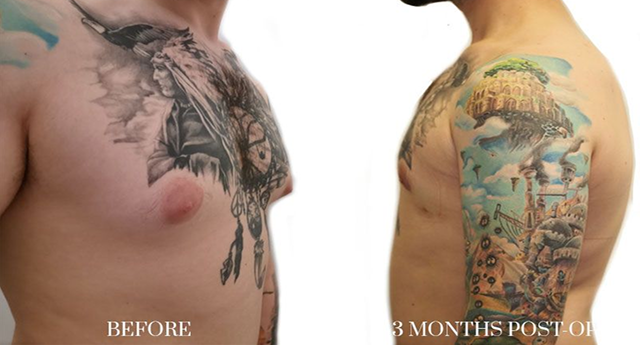
Gynecomastia:
Frequently Asked Questions
What is gynecomastia and when is surgery recommended?
Gynecomastia is the enlargement of breast tissue in the chest area. Surgery is usually recommended when breast volume does not improve with weight changes or exercise and causes physical discomfort or aesthetic concerns.
Does gynecomastia surgery completely remove excess breast tissue?
The procedure removes glandular tissue and, when necessary, excess fat from the pectoral area. The goal is to achieve a flatter, more proportionate chest contour.
Does gynecomastia surgery leave visible scars?
The incisions are usually small and are normally located at the lower edge of the areola or in small entrances used for liposuction, so the scars are usually discreet.
How long does recovery take after gynecomastia surgery?
Most patients can resume their normal activities within a few days. However, full recovery usually occurs gradually over approximately four weeks.
Are the results of gynecomastia surgery permanent?
The results are usually long-lasting, especially if a stable weight and healthy lifestyle habits are maintained.
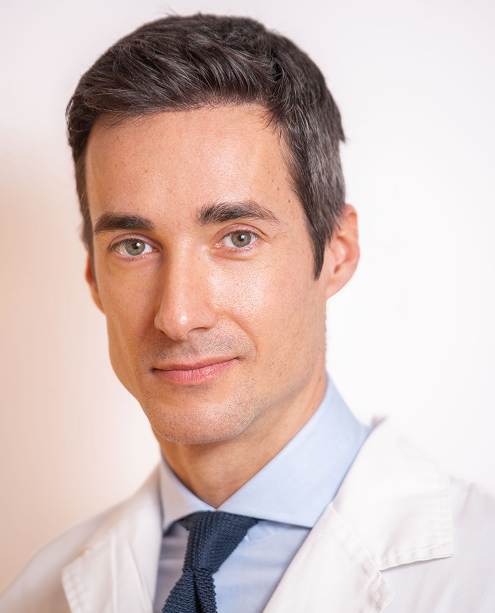
Dr. Richard Fakin
Internationally recognised plastic surgeon


At his clinics in Madrid and Zurich, Dr. Fakin leads a highly professional and committed team of specialists who share the same philosophy: to provide medically rigorous care while maintaining a warm, compassionate approach. Each patient receives personalised support, from the first consultation through to postoperative follow-up.
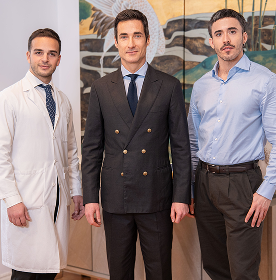
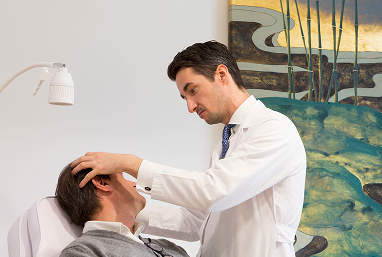
Beyond surgical technique, the commitment of Dr. Fakin and his team is reflected in transparent, honest and personalised care, where each patient is treated with dedication and professionalism at every stage of the process.
Our facilities
Madrid
-
C. de Velázquez, 109, 28006 Madrid, Spain
-
madrid@drrichardfakin.com
-
+34 679 85 86 39
-
C. de Velázquez, 109, 28006 Madrid, Spain
-
madrid@drrichardfakin.com
-
+34 679 85 86 39
Zurich
-
Giesshübelstrasse 45, 8045 Zurich
-
zurich@drrichardfakin.com
-
+41 78 206 44 88
-
Giesshübelstrasse 45, 8045 Zurich
-
zurich@drrichardfakin.com
-
+41 78 206 44 88
Book your free consultation