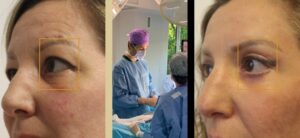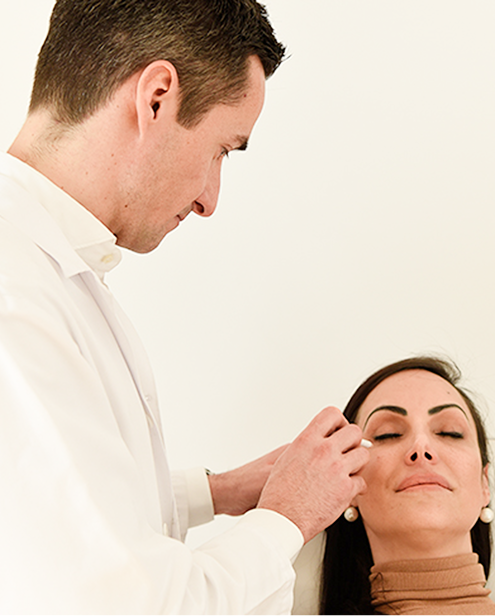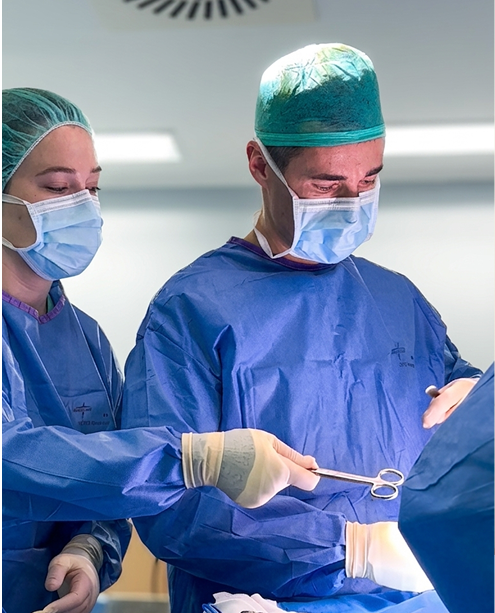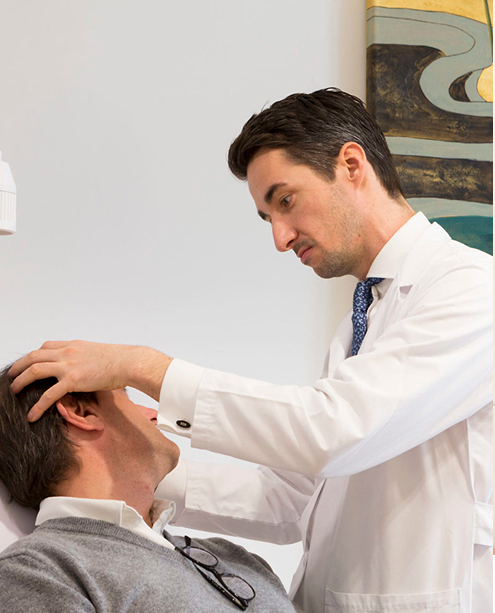
Before-and-after photographs of blepharoplasty show how one’s appearance can change following eyelid surgery, but the results are not immediately apparent. During the first few weeks, there may still be swelling, bruising and visible scarring, so it is important to understand how the area heals before assessing the final result.
Blepharoplasty can be performed on the upper eyelids, lower eyelids or both, depending on the anatomy and individual needs of each patient. It can address excess skin, fat deposits and other changes that contribute to a tired or aged appearance around the eyes. On the page at Blepharoplasty by Dr Richard Fakin Specific information on the techniques and possibilities of the procedure is available.
In this article, we focus on a different issue: what can actually be observed in ‘before and after’ photos of blepharoplasty, how the eyelids change during recovery, where the scars are located, and when the results can begin to be assessed more accurately.
Blepharoplasty should be assessed as part of the overall appearance of the eyes
The eye area consists of delicate structures, and even small anatomical differences can significantly alter the appearance of the eyes. For this reason, before-and-after photographs should be analysed taking into account each patient’s starting point, rather than simply the amount of skin or bags removed.
The position of the eyebrows, skin quality, the distribution of facial volume and the anatomy of the eyelids also influence the visual result.
What changes might occur before and after blepharoplasty?
Blepharoplasty can primarily address excess skin on the eyelids and the presence of bags under the eyes, although the specific outcome depends on the type of procedure performed and the patient’s initial anatomy.
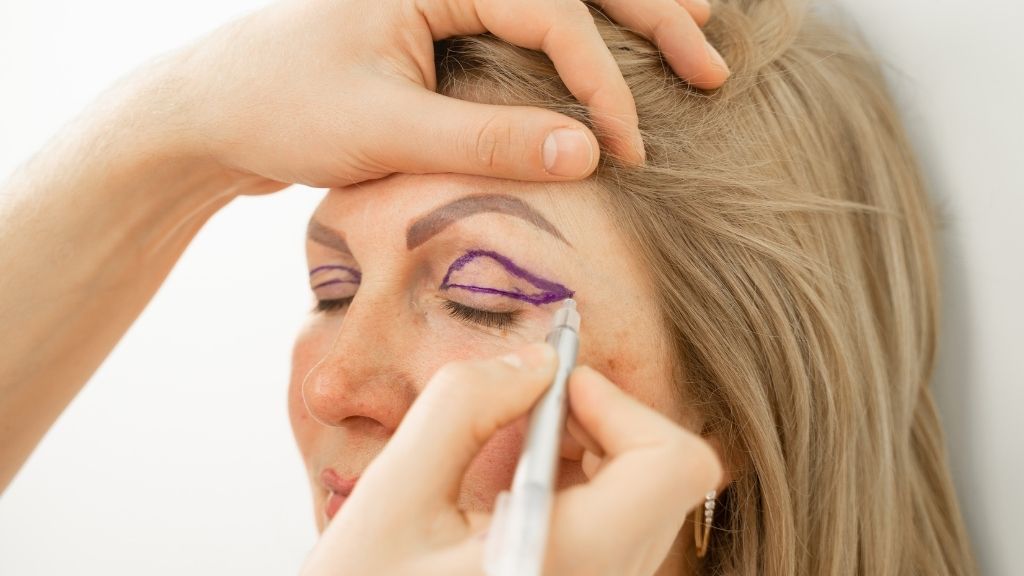
In upper blepharoplasty, the procedure usually focuses on the skin that accumulates above the eyelid crease and which can make the eyes appear heavier. Where clinically indicated, localised fat deposits may also be treated.
In lower blepharoplasty, the aim may be to reduce or redistribute bags under the eyes, treat skin laxity, or combine different surgical techniques. Depending on the individual case, the procedure may be performed through the skin or via a transconjunctival approach from the inner surface of the eyelid.
When both the upper and lower eyelids are treated in a single procedure, this is usually referred to as a full blepharoplasty. This does not mean that everyone needs to have both areas treated: whether a procedure is recommended depends on which structures are affecting the appearance of the eyes.
Blepharoplasty: before and after – how the results develop
The results of blepharoplasty develop gradually over weeks and months. Photographs taken a few days after the operation cannot be compared with those taken once the swelling has subsided and the scars have healed.
| Stage | What can be observed | How to interpret the result |
|---|---|---|
| The first few days | Swelling, bruising, a feeling of tightness and fresh scars | It is still too early to assess the outcome |
| First and second weeks | Gradual reduction in bruising and swelling | The design is beginning to take shape |
| The first few months | The tissues continue to settle, and the scars change in colour and texture | The result can be seen more clearly |
| Subsequent months | Gradual maturation of the scars and stabilisation of the tissues | This is a better time to compare the situation before and after |
These timeframes are approximate. Recovery times may vary depending on the type of blepharoplasty, the extent of the procedure, the healing process and each patient’s individual circumstances.
What are the first few days like after blepharoplasty?
During the first few days, it is common for the appearance not yet to resemble the final result. Swelling may make both sides look slightly different, and bruises may change colour as they gradually fade.
You may also experience a feeling of tightness, tenderness around the incisions or minor discomfort. The surgical team will provide personalised advice on hygiene, medication, eye protection, physical activity and wound care.
One of the most common mistakes when assessing the results of a blepharoplasty is to worry about any asymmetry that is noticed too soon. During the initial phase, the swelling does not always subside at exactly the same rate on both sides.
For this reason, the first few weeks should be seen as a recovery phase rather than a definitive indication of the outcome.
Blepharoplasty scars: where they are and how they heal
The location of the scars depends on the procedure performed. Upper blepharoplasty, lower blepharoplasty with external access, and transconjunctival lower blepharoplasty all use different approaches.
Scar from upper blepharoplasty
In upper blepharoplasty, the incision is usually made within the natural crease of the eyelid. This location helps to conceal the scar when the eye is open, once healing has progressed.
During the first few weeks, the line may appear pink, slightly raised or more pronounced than expected. Scars go through a maturing process that continues for several months, so they should not be judged solely on their initial appearance.
Scar from lower blepharoplasty
When lower blepharoplasty is performed using a cutaneous approach, the incision is usually made close to the edge of the lower eyelashes. Its position is designed to ensure that it is barely visible once the scar has healed properly.
In certain patients, a transconjunctival approach from the inside of the eyelid may be used. This technique avoids an external skin incision, although it is not suitable for all situations and the choice of approach depends on the structures that need to be treated.
Do scars disappear completely?
It is more accurate to say that scars gradually become less noticeable than to promise that they will disappear completely. How they develop depends on the individual’s skin response, sun exposure, smoking, post-operative care and other factors relating to the healing process.
When do you start to see results?
The first changes can be seen as the swelling and bruising subside, but the result continues to develop thereafter.
During the first few weeks, the swelling around the eyes gradually begins to subside. However, the skin, tissues and scars continue to settle over the following months.
This explains why a ‘before and after’ photograph may look very different from what a person sees when looking in the mirror during the first few days. There is usually a considerable period of time between the pre-operative photograph and the image used to show the final result.
To interpret a set of results correctly, it is also helpful to know how much time has elapsed since the operation.
Blepharoplasty results: what to look out for
Photographs and audiovisual material provide a better understanding of how the appearance of the eyes may change following eyelid surgery. When comparing results, it is important to take into account the initial anatomy, the procedure performed and the time elapsed since the operation.
When comparing ‘before’ and ‘after’ photos of blepharoplasty, it is worth paying attention to various aspects:
- The amount of skin visible on the upper eyelid.
- The presence and prominence of the lower eyelids.
- The transition between the lower eyelid and the cheek.
- The overall symmetry of the gaze.
- The position of the eyebrows.
- The person’s facial expression.
- The angle and lighting of the photographs.
- The time that has elapsed since the operation.
You can find this information on the clinic’s website Real-life before-and-after examples of blepharoplasty. These images can help you understand what sort of changes are possible, but they do not allow you to predict the outcome for another patient.
Can blepharoplasty change one’s facial expression too much?
Blepharoplasty aims to address certain changes in the eyelids whilst maintaining a harmonious balance with the rest of the face. The planning should not be based simply on removing as much skin or fat as possible.
The periocular region plays a role in both facial expression and the protection and function of the eyes. For this reason, an approach tailored to the anatomy is particularly important.
A distinction must also be made between changes originating in the eyelids and those relating to other structures. An eyebrow set lower, for example, may contribute to the appearance of a heavy eyelid without the problem lying solely in the eyelid skin.
The consultation enables a comprehensive assessment of the overall appearance to be carried out before deciding which structures should be treated and which should be preserved.
Upper, lower or full blepharoplasty: why the results differ
Results vary because not all patients undergo the same procedure. Upper and lower blepharoplasty target different structures and are indicated for different reasons.
A person whose main problem is excess upper eyelid skin may see a particularly noticeable change in the apparent width of their eyes. Another person with lower eyelid bags may experience a more obvious improvement in the transition between the eyelid and the cheek.
Where changes are present in both areas, a full blepharoplasty may be considered. However, each procedure must be tailored to the patient, and there is no standard amount of skin or fat that needs to be removed.
What factors influence the final result of blepharoplasty?
The final outcome depends on the surgical technique, but also on the patient’s anatomy and how each patient progresses during recovery.
Factors that may have an influence include:
- The quantity and quality of the skin.
- The distribution of fat around the eyes.
- The anatomy of the eyelids.
- The position of the eyebrows.
- The quality of the fabrics.
- Individual healing.
- Post-operative care.
- Sun exposure during recovery.
- Tobacco and other factors that may affect wound healing.
- The natural ageing process.
For these reasons, two people starting from seemingly similar situations may follow different paths.
Blepharoplasty with Dr Richard Fakin in Madrid and Zurich
The Dr. Richard Fakin He is a plastic, reconstructive and cosmetic surgeon practising in Madrid and Zurich. Among the facial surgical procedures he performs is blepharoplasty.
The assessment enables us to examine the anatomy of the eye, identify which structures influence the appearance of the eyelids, and explain the options for upper, lower or full blepharoplasty, depending on each individual case.
This is also the time to discuss the expected scars, the recovery process and what outcome can be considered realistic. The testimonials from the clinic’s patients They can provide information about individual experiences, although they are never a substitute for a medical assessment, nor do they allow us to predict the outcome for another person.
Blepharoplasty results with a personalised assessment
A ‘before and after’ comparison can show the change achieved through eyelid surgery, but to interpret it correctly, it is necessary to take into account the initial anatomy, the technique used and the time that has elapsed since the operation.
Healing and the reduction of inflammation are gradual processes. For this reason, the outcome should be assessed during follow-up and not solely on the basis of the first few weeks.
A consultation at Dr Richard Fakin’s clinics in Madrid or Zurich allows us to assess the case and determine which type of blepharoplasty may be appropriate, what the recovery process would be like, and what changes can realistically be expected.
This content is for information purposes only and is not a substitute for an individual medical assessment.