Breast lipofilling and breast implants both allow for an increase in breast volume, but they use different techniques and do not offer exactly the same options. Breast augmentation using the patient’s own fat can be an alternative when a moderate change is sought without the use of implants, whilst implants allow for a more direct approach to planning aspects such as volume and projection.
The choice between using one’s own fat or implants should not depend solely on which of the two options looks more natural. Anatomy, the desired volume, skin quality, chest proportions, the amount of fat available and each patient’s expectations all influence the planning process.
Furthermore, it is not always necessary to view them as two opposing techniques: in certain cases, a combination of implants and fat grafting may be worth considering. Understanding what each procedure has to offer helps to better understand which option is best suited to each situation.
What is the difference between breast lipofilling and implants?
The main difference lies in the material used for breast augmentation. Breast lipofilling uses the patient’s own fat, whilst augmentation with implants uses a breast prosthesis.
In lipofilling, fat is extracted via liposuction from a donor site, processed and then transferred in a controlled manner to different areas of the breast. This makes it possible to increase volume and modify specific contours without inserting an implant.
Implants, on the other hand, allow you to choose from a range of options in terms of volume, shape and projection. The choice of implant should be tailored to the width of the chest, the breast base, the existing breast tissue and the body’s proportions.
On the page at Breast lipofilling by Dr Richard Fakin You can find specific information on breast augmentation using autologous fat transfer. The breast augmentation surgery It also provides information on the options available for breast implants.
Breast implants allow for a more direct approach to planning the volume and projection of the breast. The choice of implant must be tailored to the patient’s anatomy, breast base, the amount of existing tissue and their individual goals.
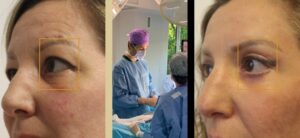
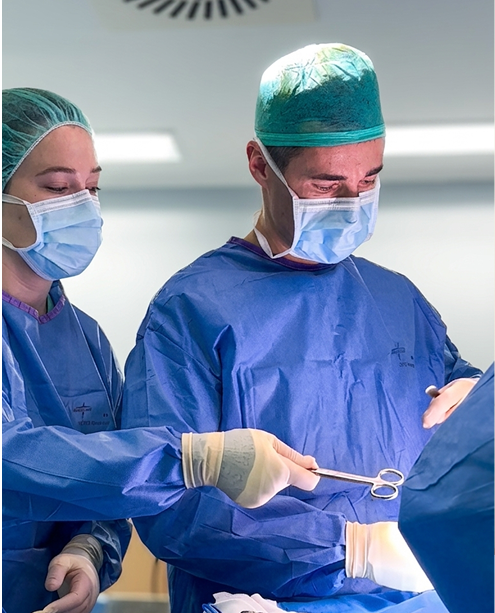
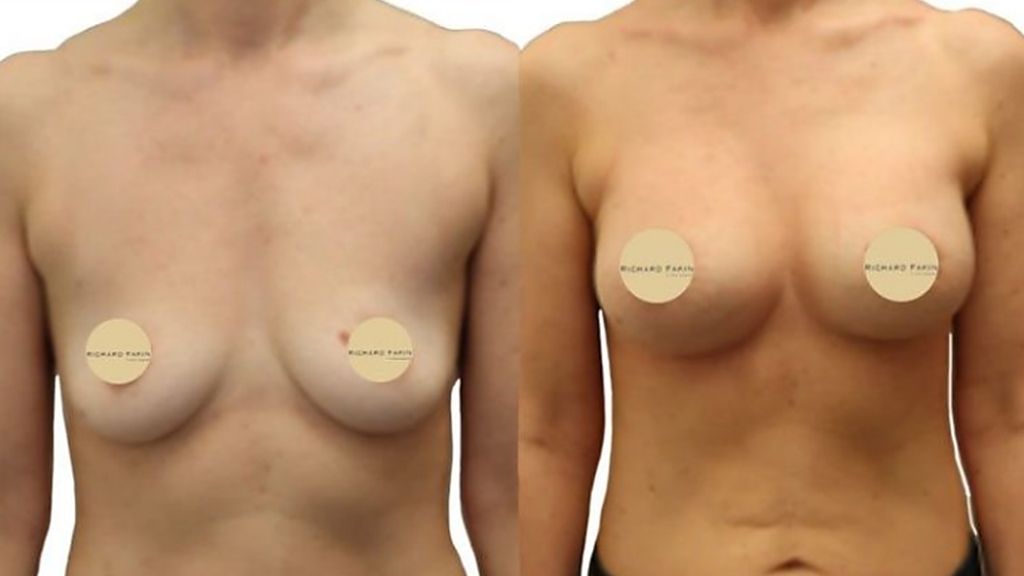
This image shows the pre-operative condition and the appearance during surgery of a breast augmentation procedure using implants. The appearance observed during surgery does not represent the final result following recovery.
Breast augmentation using the patient’s own fat: how it works and what results it delivers
Breast augmentation using the patient’s own fat combines liposuction with the transfer of the harvested adipose tissue to the breasts. First, one or more donor sites with sufficient fat are identified, and the extracted tissue is then prepared before being injected.
The amount that can be transferred depends on the anatomy, the available tissue and the breast’s ability to accommodate that volume properly. For this reason, lipofilling is usually considered particularly when a moderate increase in breast size is desired.
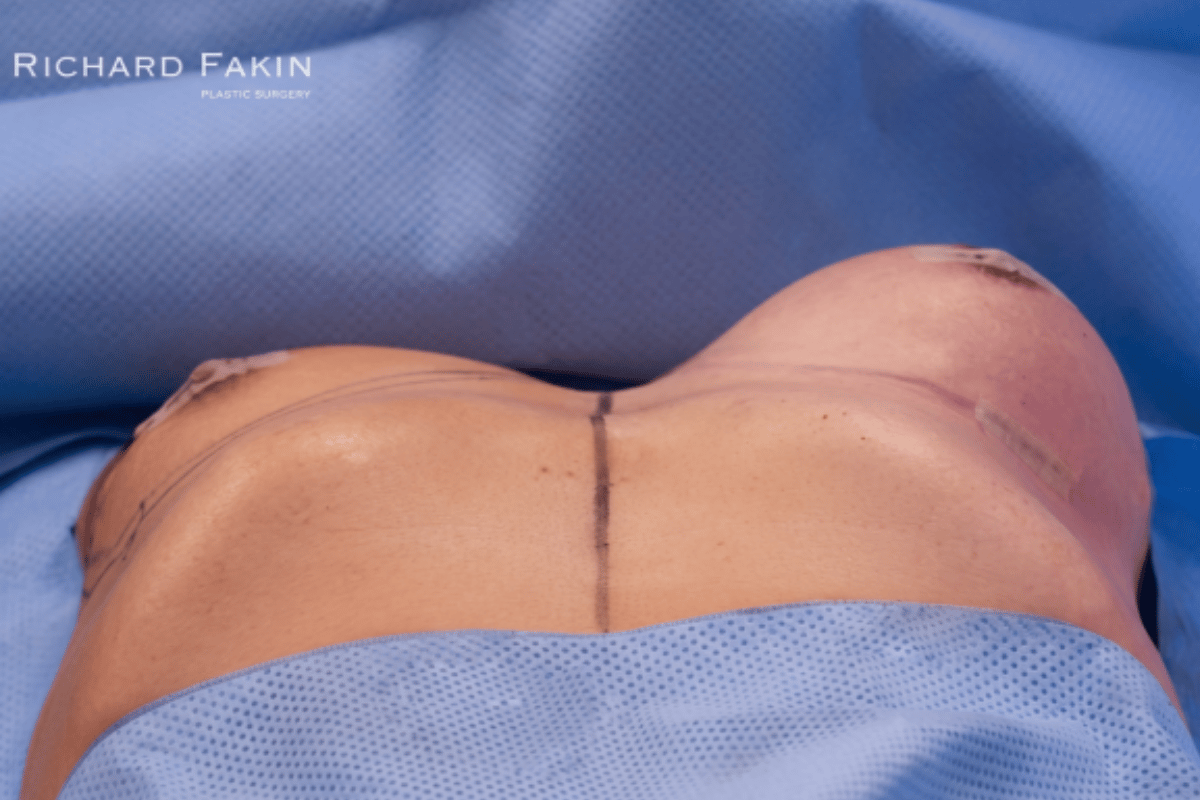
It does not allow the final volume to be determined with the same degree of predictability as with a prosthesis. Following the procedure, there is swelling, and some of the transferred fat may be reabsorbed as the healing process progresses, whilst the rest becomes integrated into the tissues. The appearance during the operation or in the first few days does not, therefore, represent the final result.
This technique may be of interest to patients who wish to have breast augmentation without implants and who have sufficient fat in donor areas. It can also be used to add volume in specific areas or to correct certain contour irregularities. If there is very little body fat, or if the patient wishes to achieve significant augmentation and a very specific projection, the options available may be more limited.
Breast implants: what they offer and when they may be an option
Breast implants allow for more direct control over the increase in breast volume and projection. This can be particularly important when seeking a change that is difficult to achieve through fat transfer alone.
Planning is not simply a matter of choosing a size. Factors such as chest width, the base of the breast, existing breast volume, breast position, skin quality and the amount of tissue that will cover the implant must all be taken into account.
There are also different types of implants and various placement options, the choice of which must be tailored to the individual. A patient with little available fat, for example, may have different options to another who has sufficient tissue for lipofilling.
As they are implanted devices, breast implants require long-term monitoring and may necessitate further surgery in the future. This issue should therefore also be taken into account in the decision-making process and as part of the pre-operative information provided.
Breast lipofilling or implants: key differences
Both techniques can achieve breast augmentation, but there are significant differences in the material used, the volume that can be achieved, the scarring and the post-operative recovery.
| Aspect | Breast lipofilling | Breast implants |
|---|---|---|
| Material | Fat from the patient herself | Breast prosthesis |
| Volume | Determined by the available fat and its changes | It enables a more direct approach to planning volume and projections |
| Donor area | It is necessary for producing fat | It is not necessary |
| Scars | Minor incisions associated with extraction and local anaesthesia | An incision is required to insert the implant |
| Follow-up | Changes in body fat and liposuction areas | Long-term monitoring of the breast and the implant |
Which option gives the most natural-looking result?
Both breast lipofilling and implants can achieve a harmonious result when the technique is correctly indicated and adapted to the patient’s anatomy. Using the patient’s own fat does not automatically guarantee a more natural result, and using an implant does not necessarily result in an artificial appearance.
The balance between the new volume, the breast base, the chest and the existing tissues plays a key role. Fat can be particularly useful for moderate enlargements and for adding volume in specific areas, whilst implants allow for a more direct approach to achieving specific goals regarding size and projection.
Can implants and autologous fat be combined?
Yes. In selected patients, a hybrid breast augmentation may be considered. In this approach, the implant primarily provides volume and projection, whilst fat can be used in specific areas to improve coverage, certain transitions or the contour.
This shows that the choice is not always limited to fat transfer or implants. In certain cases, the two techniques can be combined within the same treatment plan.
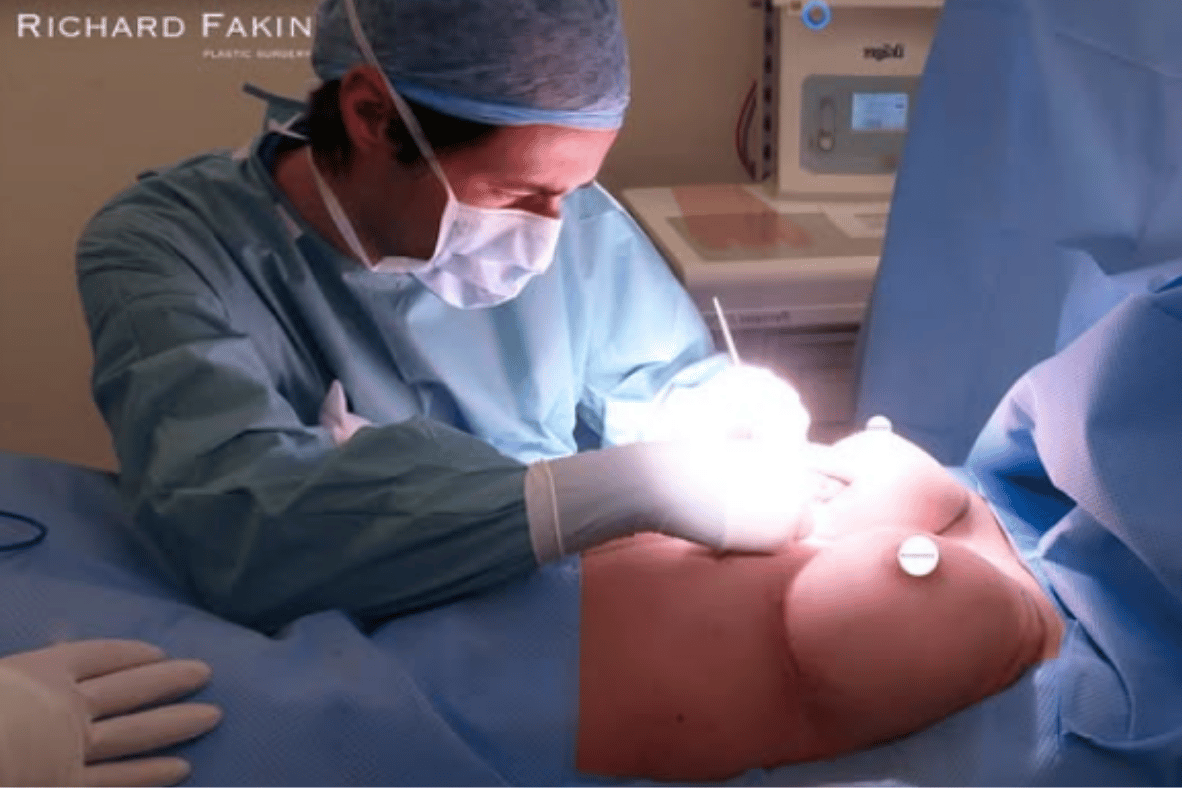
In certain cases, the planning of breast augmentation may involve a combination of different techniques. The choice depends on the patient’s anatomy, the desired volume and the characteristics of the tissue.
A surgical assessment enables us to determine whether breast lipofilling, breast augmentation using implants, or a hybrid technique combining both options might be the most suitable choice.
Recovery, scarring and the long-term outcome
Recovery differs between the two techniques. In breast lipofilling, both the breast and the areas from which the fat was harvested will need time to recover. During the first few days, there may be swelling and tenderness in both areas, and the volume of the breast may change as the swelling subsides and the transferred tissue heals.
With breast augmentation using implants, recovery focuses mainly on the breast surgery itself and may include swelling, a feeling of pressure, tightness and discomfort during the initial phase. A return to work, exercise and other activities should be tailored to the procedure carried out and the individual’s recovery.
There are also differences in the scars. Lipofilling involves small incisions associated with liposuction and fat injection, whilst inserting an implant requires an incision in the breast. In both cases, the scars gradually change over the following months.
When can the results of lipofilling be assessed?
The appearance during the operation should not be interpreted as the final result. Following fat transfer, there is swelling and the volume continues to change. Photographs taken during the operation are useful for understanding the procedure and visualising an initial change, but a comparison of results should be made once recovery is further along.
Risks, limitations and how to choose between using your own fat and implants
Both breast lipofilling and breast augmentation using implants are surgical procedures and require a prior medical assessment. Each technique has different risks and limitations, which must be explained before a decision is made.
Complications associated with liposuction, infection, irregularities, fat resorption, fat necrosis or sebaceous cysts may occur with lipofilling. With implant-based augmentation, there are specific risks such as infection, capsular contracture, changes in the position of the implant or rupture, amongst others.
The choice should be based on the patient’s anatomy and the desired results. During the assessment, the following factors are taken into account: the initial volume and shape of the breasts, the width of the chest, the condition of the skin, the amount of available fat, the desired projection, any previous surgery, and the patient’s preferences regarding the use of implants.
There is no single technique that is universally superior. A patient seeking a moderate increase in volume who has sufficient fat may require a different approach to one who wishes for a more pronounced change in volume. In other cases, a hybrid technique may be considered.
Breast lipofilling and breast augmentation with Dr Richard Fakin
The Dr. Richard Fakin He is a plastic, reconstructive and cosmetic surgeon practising in Madrid and Zurich. The assessment allows for an evaluation of the characteristics of the breast, body proportions, the availability of fat and the desired results before deciding which technique to use.
The patient testimonials They can provide information about individual experiences, although they do not allow us to predict the outcome another person might achieve.
A consultation at Dr Richard Fakin’s clinics in Madrid or Zurich allows patients to compare the different breast augmentation options and find out which technique is best suited to each patient’s individual circumstances and goals.
This content is for information purposes only and is not a substitute for an individual medical assessment.