Protruding ears are one of the physical features that attract the most comments from childhood onwards. Some people avoid wearing their hair tied back or feel self-conscious in photographs. Otoplasty is the surgical procedure used to correct them. This article explains why they occur, what the operation involves, who is eligible for the procedure and what the recovery is like. Information about the procedure at the clinic can be found on the ear surgery in Madrid.
What are protruding ears?
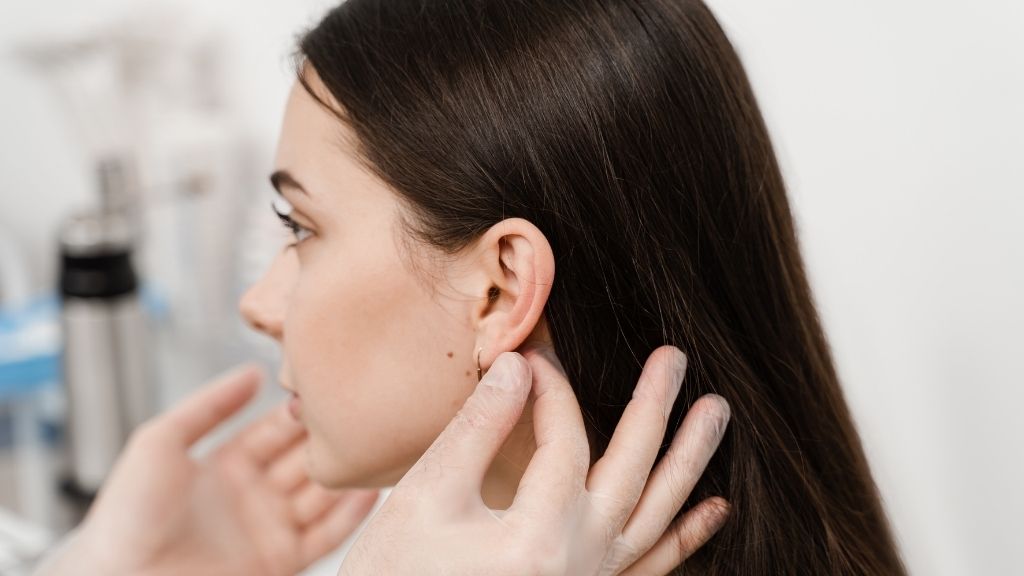
Protruding ears are ears that stick out from the head more than usual. They are usually caused by a particular shape of the cartilage, the flexible tissue that gives the ear its structure. They do not affect hearing or health. If a person wishes to correct them, the recommended procedure is otoplasty, a surgical procedure that reshapes the cartilage.
Why do protruding ears develop?
Protruding ears are present from birth and are usually hereditary. They are not caused by sleeping position or any other habit.
There are two main causes, either on their own or in combination. The first is a poorly defined antihelix. The antihelix is the curved fold on the inside of the ear; if it does not form properly, the top of the ear protrudes outwards. The second is a concha that is too large. The concha is the central cavity of the ear, next to the ear canal; if it is very deep, it pushes the ear forwards.
Sometimes the lobe – the soft lower part of the ear – also plays a role. Identifying the specific cause enables the appropriate technique to be chosen.
Otoplasty: surgery for protruding ears
Otoplasty is a surgical procedure that alters the shape or position of the ears. In the case of protruding ears, the aim is to bring the ears closer to the head and achieve a natural shape.
Ear surgery addresses the root cause of the problem. If the antihelix is not very pronounced, the surgeon creates or reinforces that fold. If the concha is too large, they reduce it or reposition it closer to the head. If the lobe is detached, this can also be corrected. The procedure can be carried out on one ear or both, depending on the individual case.
Many people seek this operation to «pin their ears back», but the aim is not to pin them to the head, but to give them a natural proportion in relation to the face.
Otoplasty or non-surgical correction: differences between the options
Otoplasty is the only option that provides a permanent correction for protruding ears in older children and adults. Non-surgical alternatives do not alter the cartilage once it has matured.
| Option | How it works | Who is it for? | Limitations |
|---|---|---|---|
| Cast-making for newborns | A mould guides the shape of the cartilage whilst it is still very flexible | Babies in the first few weeks of life | It becomes less effective as the cartilage hardens |
| Adhesive correctors | They keep their ear close to their head whilst wearing them | People looking for a temporary effect | They do not alter the cartilage: once removed, the ear returns to its original position |
| Otoplasty | It reshapes the cartilage and secures the ear in a new position | Children with a developed sense of hearing, teenagers and adults | It is a surgical procedure, leaving a scar behind the ear and requiring a recovery period |
Advantages and limitations of otoplasty
The main advantage of otoplasty is that it corrects the cause of protruding ears, rather than just their appearance. By reshaping the cartilage, the result is permanent and does not require any external devices.
Furthermore, the scar is hidden behind the ear and the technique is tailored to each ear individually. One of its limitations is that it does not produce two ears that are exactly the same, as they are not naturally identical either. Like any surgical procedure, it requires a period of aftercare and carries risks that should be understood before making a decision.
Who is a suitable candidate for ear surgery?
Anyone with protruding ears who wishes to have them corrected, is in good health and has realistic expectations may be a suitable candidate.
In children, surgery is considered once the ear has almost reached its adult size, which occurs during childhood. It is also important that the child understands the procedure, wants to undergo it and is able to follow the post-operative care instructions. Adolescents and adults can undergo the operation at any age.
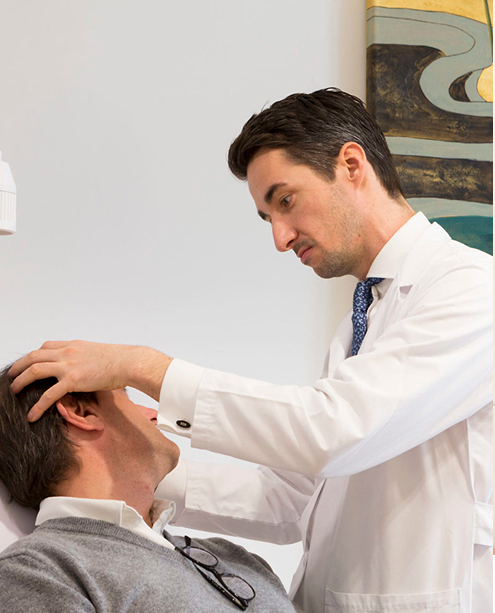
During the consultation, the antihelix, the concha, the lobe and any differences between the two ears are examined, in addition to the patient’s medical history.
What is the otoplasty procedure like?
Otoplasty is planned on an individual basis for each ear, depending on the structure causing the gap.
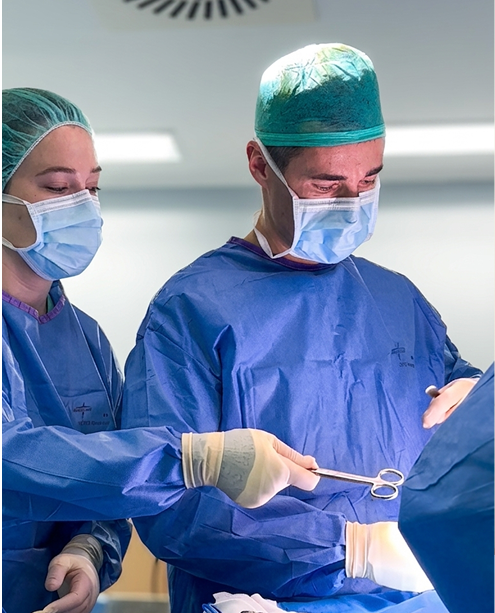
During the operation, the surgeon makes an incision in the retroauricular fold, which is the groove where the back of the ear joins the head. Through this incision, they gain access to the cartilage. Depending on the case, they create the antihelix fold using internal stitches, reduce or reposition the concha, and adjust the lobe. Once finished, the incision is closed and a dressing is applied to protect the ears and maintain their new position.
What does the scar from an otoplasty look like?
The scar from otoplasty is located at the back of the ear, within the retroauricular fold. Due to its position, it is not visible from the front or in profile under normal circumstances.
At first, it may appear pink and slightly hardened, but over time it tends to lighten in colour and flatten out.
Recovery from otoplasty and safety
Recovery from otoplasty focuses on protecting the ears whilst the cartilage settles into its new shape. Specific instructions are provided by the medical team on a case-by-case basis.
After the operation, the ears are bandaged. It is common to experience swelling, a feeling of tightness and changes in sensitivity in the area. You should avoid any knocks and any position that bends the ears – for example, whilst sleeping or putting clothes on over your head – and attend your follow-up appointments.
The risks associated with otoplasty are explained during the consultation before a decision is made. Among the most common are haematoma, which is a build-up of blood under the skin; infection; scarring complications; minor asymmetries between the two ears; and recurrence, which is the partial return of the ear to its previous position. If you experience severe pain in one ear, a fever or redness around the wound, you should contact the medical team.
Ear surgery: before and after – what changes?
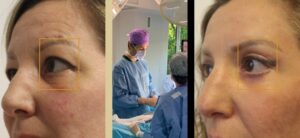
In the before-and-after photographs of an otoplasty, the main change is visible from the front: the ears sit closer to the head. From the side, the new shape of the antihelix can be seen.
The photographs from the first few weeks still show some swelling, so they are useful for gauging the trend, not the final result. It may also be helpful to know the patient testimonials, although another person’s experience does not allow us to predict an individual’s outcome.
Protruding ear surgery with Dr Richard Fakin in Madrid and Zurich
Protruding ears are caused by the shape of the cartilage and do not affect health. Otoplasty addresses the specific cause of each ear, leaves the scar hidden behind the ear and requires the ears to be protected during recovery.
At the clinics in Madrid and Zurich, the Dr. Richard Fakin, a Swiss-Italian plastic surgeon specialising in plastic, reconstructive and cosmetic surgery, with a focus on facial, breast and body surgery as well as gender-affirming surgery, assesses each case individually and explains which technique is best suited to each ear. Further information about the procedure can be found on the ear surgery in Madrid.
Would you like to find out whether otoplasty is the right option for you?
Book a consultation with Dr Richard Fakin in Madrid or Zurich. He will assess the shape of your ears and explain which technique is best suited to your case.
Book an appointment for an assessment