Colovaginoplasty is a gender-affirming surgical technique that uses tissue from the sigmoid colon to reconstruct the vaginal canal. It is one of the vaginal reconstruction options that may be considered, depending on each patient’s anatomy. Understanding how it differs from penile inversion, as well as the outcomes and post-operative care, helps in preparing a specialist assessment.
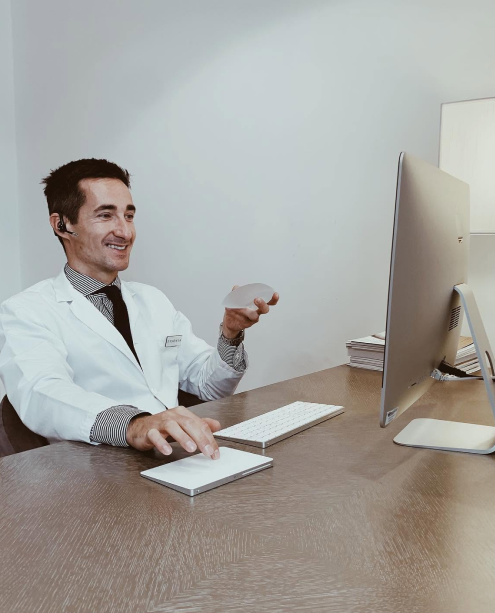
Dr Richard Fakin performs this procedure as part of his work in gender-affirming surgery. His training in genital surgery included a placement in Bangkok in 2015, working alongside Dr Preecha at the Preecha Aesthetic Centre and King Chulalongkorn University Hospital. This article explains how the procedure is carried out and recounts the experiences of Emmy and Alexia, two patients who share different stages of their recovery.
What is a colovaginoplasty? It is a reconstruction of the vaginal canal using a segment of the sigmoid colon, part of the large intestine. The tissue retains its ability to produce mucus. The procedure involves bowel surgery and genital reconstruction, so whether it is appropriate depends on the patient’s anatomy, medical history and a specialist assessment.
How does Dr Richard Fakin perform colovaginoplasty using the sigmoid colon?
The technique described by Dr Richard Fakin’s clinic involves using a segment of the sigmoid colon measuring approximately 14 centimetres. This tissue forms the new vaginal canal: one end is closed off and the other is connected to the vaginal opening. The continuity of the colon is restored to maintain its intestinal function.
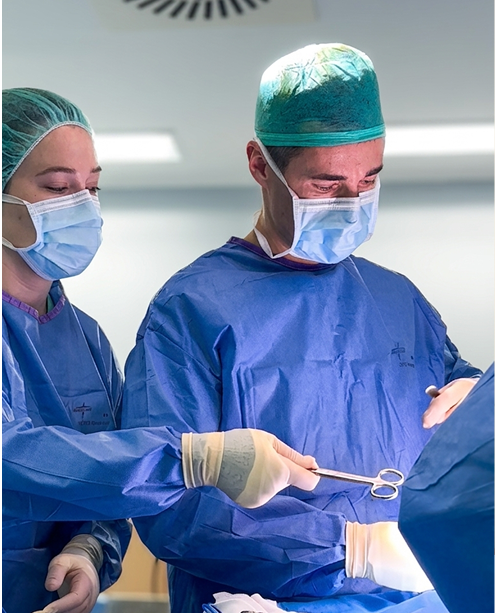
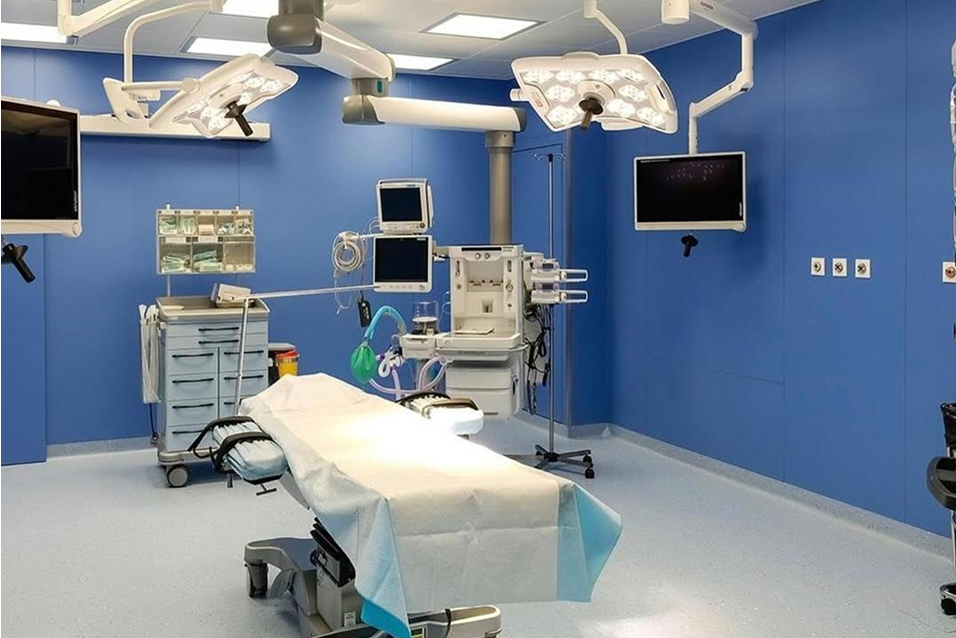
The procedure is carried out using laparoscopy, a surgical technique involving small abdominal incisions, in collaboration with specialists in colorectal surgery. Reconstruction of the vaginal canal is incorporated into the planning of the external genital anatomy.
When is colovaginoplasty recommended over other techniques?
According to Dr Fakin’s vaginoplasty webpage, sigmoid colon interposition is usually recommended when the penis is smaller. The clinic explains that the choice of technique depends on each patient’s anatomical characteristics.
The availability of tissue and anatomical characteristics help to determine which procedure may be considered. The Dr Fakin’s vaginoplasty page describes the techniques available and the individual assessment process.
Colovaginoplasty or penile inversion: what are the differences?
Colovaginoplasty uses a segment of the sigmoid colon, whilst penile inversion primarily uses genital skin to form the vaginal canal. This choice affects the characteristics of the lining tissue and the surgical approach.
| Aspect | Colovaginoplasty | Penile inversion |
|---|---|---|
| Tissue of the duct | Segment of the sigmoid colon | Mainly genital skin |
| Humidity | Intestinal mucus secretion | It does not produce intestinal mucus |
| Intestinal approach | Yes | Not usually |
| Aftercare | Check-ups and dilations as required | Check-ups and dilations as required |
What results can be expected following a colovaginoplasty?
The outcome of colovaginoplasty should be assessed in terms of both the reconstruction of the vaginal canal and the external genital anatomy. According to information published by Dr Fakin, the appearance of the vulva may be comparable to that of penile inversion. Intestinal tissue also provides a specific benefit: the production of secretions that help to keep the cavity moist.
Natural lubrication using tissue from the sigmoid colon
The intestinal tissue continues to produce mucus and provides moisture to the vaginal canal. The clinic itself points out that intestinal secretions may resemble vaginal discharge. This characteristic is one of the differences that becomes apparent when comparing the two techniques.
Vaginal depth and external appearance
The segment of intestine described by the clinic measures approximately 14 centimetres. This measurement refers to the tissue used in the procedure and should not be confused with a guaranteed final depth. Reconstruction of the vulva and vaginal canal is planned according to the patient’s anatomy.
To explore this topic further, the clinic’s blog features another article on Vaginoplasty results, experiences and real-life testimonials. That content examines the evolution from a broader perspective and complements this explanation, which focuses on the sigmoid colon.
What is recovery like after a colovaginoplasty? Real-life experiences
Recovery following a colovaginoplasty involves hospitalisation, medical follow-up and care of the neovagina. Dr Fakin’s official website sets out the following timeframes for vaginoplasty in general, without providing a separate timeline for the sigmoid colon technique.
The clinic’s information also states that vaginoplasty is carried out under general anaesthesia. The times shown in the table are approximate and may vary depending on the specific procedure performed and each patient’s recovery.
| Stage | Published guidelines on vaginoplasty |
|---|---|
| Hospitalisation | Discharge in about a week’s time |
| Social activity | Around 14 days |
| Back to work | Between 4 and 6 weeks |
| Full recovery | Between 2 and 3 months |
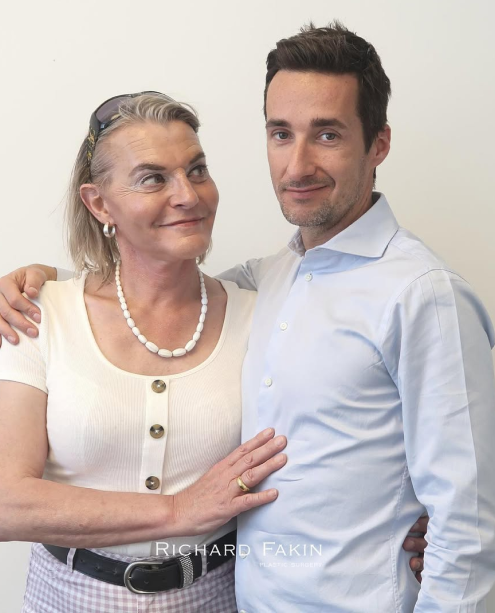
Emmy: her experience with colovaginoplasty in Madrid
Emmy, from Greece, explains in a video recorded around two weeks after her operation that she underwent a colovaginoplasty using a sigmoid colon interposition performed by Dr Fakin. She explains that she travelled to Madrid, underwent pre-operative tests and spent several days recovering in hospital.
In her case, she recalls that the operation lasted between four and five hours and that she was in hospital for approximately six days. Her account helps to explain how the trip was organised and what the first few days of her post-operative recovery were like, without treating these times as a fixed schedule for other patients.
Emmy recounts her operation and initial recovery in English.
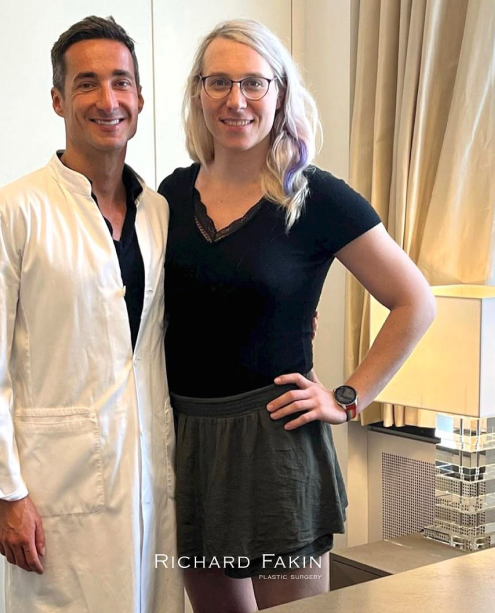
Alexia: her experience following colovaginoplasty
Alexia says she had her operation at Vithas Aravaca in Madrid. She explains that she was in hospital for about a week and then stayed in a nearby hotel for about ten days to attend her follow-up appointments.
She also explains that Dr Fakin taught her how to perform the dilations. In her experience, she felt pressure but no pain at first. She says she used each size for about a month and that changing sizes could cause some discomfort or pain. The pace of the dilations is determined on an individual basis with the medical team.
In a post published three years after the procedure, Alexia shares the personal significance of her journey and how she has experienced it in the long term.
Dilation following colovaginoplasty: care and follow-up
Dilation is part of the aftercare for the neovagina following surgery. According to Dr Fakin’s clinic, the nursing team provides a set of dilators, instructions for use and personalised recommendations for each patient.
The official website states that regular dilation is particularly important during the first 12 months, whilst the tissues heal and adapt. It also recommends regular gynaecological check-ups as part of the follow-up care.
Alexia’s account gives an insight into what this process is like: she describes a feeling of pressure during dilation and some discomfort as her body changes shape. Her words complement the guidance provided by the medical team, who determine the appropriate course of action for each individual case.
What should you bear in mind before opting for a sigmoid colon vaginoplasty?
The choice of technique is based on an assessment of each patient’s anatomy and individual characteristics. As the clinic explains, sigmoid colon interposition is usually considered when the penis is smaller and other techniques may require different tissues to create the vaginal canal.
During the consultation, you can discuss the differences between using genital skin or intestinal tissue, how the procedure is organised in conjunction with colorectal surgery, and what follow-up care will be required afterwards. It is also an opportunity to discuss your personal goals and to address any queries you may have about caring for your neovagina.
Colovaginoplasty with Dr Richard Fakin in Madrid and Zurich
The Dr. Richard Fakin He is a Swiss-Italian plastic surgeon with EBOPRAS accreditation and academic links to the University of Zurich. His biography details his training in gender-affirming surgery in Bangkok in 2015, alongside Dr Preecha, at the Preecha Aesthetic Centre and King Chulalongkorn University Hospital. On his vaginoplasty page, he specifically describes the interposition of the sigmoid colon as one of his surgical techniques.
The clinic also brings together patient testimonials which recount their experiences of various surgical procedures. In this article, Emmy and Alexia offer two specific perspectives on colovaginoplasty and the recovery process.
Vaginoplasty using the sigmoid colon: an assessment tailored to each patient
Colovaginoplasty is an alternative method of vaginal reconstruction that uses tissue from the large intestine. Its main difference from penile inversion lies in the tissue used; therefore, the choice should be based on each patient’s anatomy and the characteristics of both techniques.
A consultation with Dr Fakin gives you an insight into how he plans the procedure, the aftercare and the options available in each case.
If you are considering vaginal reconstruction using the sigmoid colon, you can consult Dr Richard Fakin’s team to find out what options might be suitable for you.
This article is for information purposes only and is not a substitute for an individual medical assessment.