Penile lengthening and thickening involve various procedures that can alter the visible length, girth, or both. Penile lengthening and thickening should not be regarded as a standard operation, as the appropriate technique depends on each patient’s anatomy, initial proportions and objectives.
It is common to use terms such as ‘penis enlargement’ or ‘penis enhancement’ to refer to any change in size. However, lengthening and thickening do not aim for exactly the same result; they are not carried out in the same way, nor do they follow the same course during recovery.
Understanding these differences enables you to attend your consultation with more specific questions and better-informed expectations. On the page dedicated to the penis lengthening and thickening General information on the procedures available at the clinics in Madrid and Zurich can be found here.
What is penile lengthening and thickening?
Penile lengthening aims to increase the portion of the penis that is visible externally. Penile thickening aims to increase the girth by adding volume around the shaft. In selected patients, the two techniques can be combined as part of the same surgical plan.
What is the difference between lengthening and thickening the penis?
Lengthening and thickening are not two terms for the same procedure. Lengthening mainly affects the visible length, whilst thickening alters the volume and circumference.
There are also differences in the technique, the healing process and the way in which the results are assessed. In lengthening surgery, the procedure involves the structure connecting the penis to the pubic region. In thickening using the patient’s own fat, adipose tissue is harvested from another area of the body and distributed around the shaft.
| Procedure | Main objective | Standard technique | What needs to be clarified |
|---|---|---|---|
| Penis lengthening | Increase the visible length | Controlled release of the suspensory ligament | The change may be observed differently at rest and during an erection |
| Penis thickening | Increase the thickness or circumference | Lipofilling using the patient’s own fat | Some of the fat may be reabsorbed over the following months |
| Combination therapy | Improving the ratio of length to thickness | A combination of both techniques | Each procedure must be individually indicated |
Combining both techniques does not necessarily mean that the outcome will be better. The planning stage must determine which dimension is actually the cause for concern and what adjustment would be appropriate given the patient’s anatomy.
Male genital surgery requires sound judgement and careful planning
It is not a question of promising standard changes, but rather of assessing each individual’s anatomy, explaining the available techniques and determining whether the procedure is suitable for each case.
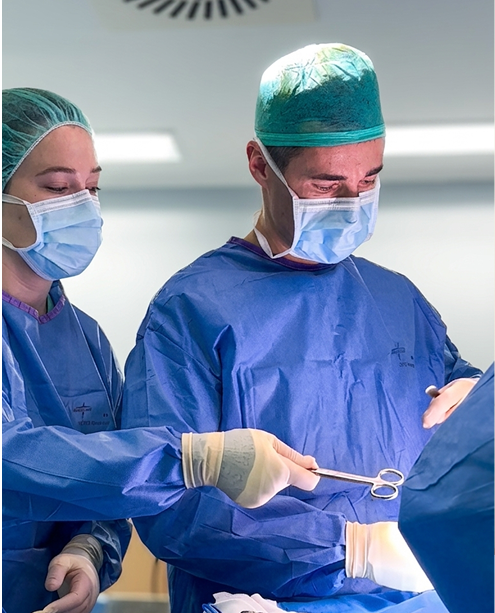
In this reel, Dr Mattia discusses penile lengthening and thickening from a medical, personalised and discreet perspective. He explains why suspensory ligament release and lipofilling using the patient’s own fat should be considered following a prior assessment.
What does penis enlargement involve?
Part of the penis is located inside the body and remains attached to the pubic region by various supporting structures. These include the suspensory ligament.
During a lengthening operation, the surgeon can release part of this ligament in a controlled manner. In this way, a portion of the shaft that was previously hidden inside can become more visible externally.
For this reason, it is more accurate to speak of an increase in visible length rather than the creation of a new anatomical length. The procedure does not add erectile tissue nor does it completely alter the structure of the penis.
The extent of the change that can be achieved depends on the attachment of the ligament, the anatomy of the base, the amount of suprapubic tissue and how the healing process progresses. These variables explain why it is not possible to promise the same degree of enlargement for everyone.
Is the result the same when flaccid and when erect?
Not necessarily. The effect of ligament release is most clearly visible when the penis is flaccid. The increase observed in the flaccid state does not always translate in the same proportion to the length during an erection.
Before surgery, standardised measurements should be taken and patients should be explained how their progress will be assessed. Comparing measurements taken in different positions or under different conditions may give an inaccurate impression of the outcome.
Penis enlargement should not be presented as a treatment that automatically improves sexual function either. If there are problems with erection, pain, curvature, loss of sensation or other symptoms, these must be investigated specifically before considering cosmetic surgery.
How is penis enlargement using the patient’s own fat carried out?
Augmentation can be carried out using lipofilling or autologous fat transfer. The term ‘autologous’ means that the fat used comes from the patient themselves.
The procedure begins with limited liposuction in a donor area, such as the abdomen, flanks or another region with sufficient tissue. The fat harvested is prepared before being transferred to the area to be treated.
The tissue is then injected around the shaft using fine cannulas. The distribution must be carefully planned to achieve a well-proportioned contour and minimise the risk of irregularities or asymmetries.
What happens to the fat after the operation?
The volume observed immediately after the procedure does not represent the final result. There is swelling during the first few days, and in the months that follow, some of the transferred tissue may be reabsorbed.
Fat that successfully integrates can be retained in the long term. However, it is not possible to know exactly what percentage will remain in each patient, as integration depends on the technique used, the quality of the tissue and the individual’s biological response.
Progress should be assessed during follow-up appointments. In certain cases, a subsequent adjustment may be considered, but this decision should only be made once the initial result has stabilised.
Can lengthening and thickening be combined?
Both techniques can be carried out as part of the same procedure where there is a suitable indication. The aim is to improve the ratio of length to circumference, rather than simply targeting a single figure.
Before recommending a combination treatment, the visible length, girth, base of the penis, distribution of suprapubic fat and the contour of the scrotum should be assessed.
In some people, a build-up of fat in the pubic region may partially conceal the base. In others, there may be excess or sagging scrotal skin. Where there is a separate indication, a scrotum lift or another supplementary procedure.
Adding procedures without a clear need may slow down recovery and does not guarantee a more proportionate result. Each technique must offer a specific benefit and be explained separately.
How much can the size of the penis increase?
There is no universal measurement that can be guaranteed before the patient has been examined and assessed. The figures found on the internet may be based on people with different anatomies, techniques, measurement methods and follow-up periods.
In lengthening procedures, the outcome depends on the amount of the internal shaft that can be exposed and on subsequent healing. In thickening procedures, the result depends on the amount of fat transferred, its distribution and the percentage that successfully integrates.
Therefore, the result should not be judged solely on the basis of the number of centimetres. Proportions, the regularity of the contour, the quality of the scar, sensitivity and the preservation of function must also be taken into account.
Nor should the initial appearance be confused with the final result. Following augmentation, there may be greater volume due to swelling, whilst lengthening surgery requires a period for the tissues to heal and adapt.
Does penis enlargement improve sexual function?
The main aim of lengthening and thickening procedures is to alter the appearance or dimensions. They are not general treatments designed to improve erections, increase sexual desire or resolve difficulties in intimate relationships.
Sexual function depends on vascular, neurological, hormonal, emotional and relational factors. Where a functional disorder is present, it must be specifically investigated before considering cosmetic surgery.
It is also important to distinguish between satisfaction with one’s appearance and sexual performance. An anatomical alteration does not, in itself, guarantee changes in self-esteem, self-confidence or satisfaction within a relationship.
Who is a suitable candidate for penile enlargement surgery?
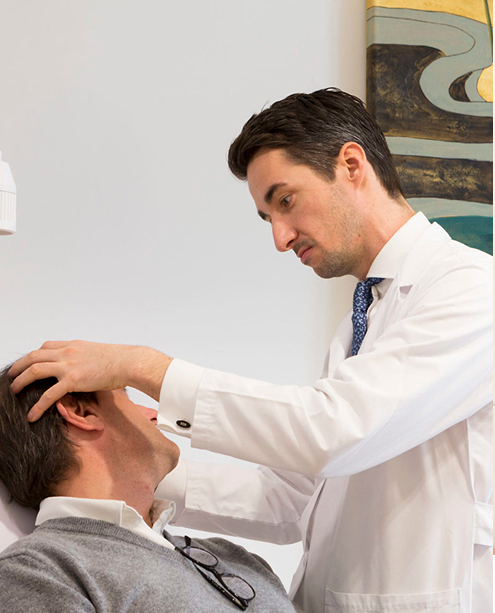
Candidacy is not solely dependent on the desire to increase size. The assessment must take into account general health, genital anatomy, initial dimensions, any associated medical conditions and the patient’s expectations.
During the consultation, the following aspects may be discussed:
- General state of health and medical history.
- The initial anatomical dimensions and proportions.
- The presence of suprapubic fat that partially obscures the base.
- The availability of a donor site when lipofilling is being considered.
- The quality of the skin and tissues.
- The presence of pain, curvature or erectile dysfunction.
- Personal motivation for undergoing the procedure.
- Expectations regarding length, thickness and recovery.
It is also necessary to distinguish between an anatomical abnormality, a penis that is partially obscured by suprapubic tissue, and a concern relating to an anatomical feature that falls within the normal range of bodily variation.
Having a consultation does not oblige you to have an operation. In some cases, the most responsible course of action may be to refrain from surgery, to investigate another medical issue first, or to reconsider objectives that cannot be achieved through surgery.
Recovery following penile lengthening and thickening surgery
Recovery depends on the technique used, whether several procedures have been combined, and the individual’s response. During the first few days, swelling, tightness, localised tenderness and temporary changes in contour may occur.
The medical team explains how to maintain good hygiene, what clothing may be suitable, how to avoid putting pressure on the area, and when to resume each activity.
| Phase | What might happen | Key points |
|---|---|---|
| The first few days | Swelling, tightness and tenderness | Relative rest and good personal hygiene as directed |
| Day-to-day activities | Gradual recovery during the first few days | Avoid pressure, friction and strenuous activity |
| Work | Re-employment depends on the type of work | Physical work may take longer |
| Sexual relations | It is usually necessary to wait several weeks | The deadline must be confirmed during a review |
| Final result | It gradually takes shape as the wound heals | With lipofilling, one must wait to assess how well the fat has integrated |
The timeframes are indicative. A return to sport, sexual activity and other activities should be tailored to the individual’s recovery and confirmed during follow-up appointments.
Just because a procedure can be carried out on an outpatient basis does not mean that no recovery is required. Observing the period of relative rest and attending follow-up appointments are part of the treatment.
Safety and potential limitations of the surgery
No surgical procedure is entirely risk-free. The outcome depends on the technique used, the patient’s anatomy, the healing process and adherence to post-operative instructions.
In procedures involving autologous fat grafting, partial resorption of the volume may occur, as well as irregularities or asymmetries. In penile lengthening procedures, the visible gain may be less than expected, and changes related to scarring or penile support may occur.
A specialist assessment makes it possible to explain these options, rule out any contraindications and determine whether the expected benefit justifies the procedure in each individual case.
Male genital surgery with Dr Richard Fakin in Madrid and Zurich
At the clinics in Madrid and Zurich, the Dr. Richard Fakin It is based on an approach centred on individualised assessment, surgical planning and a clear explanation of what can be achieved.
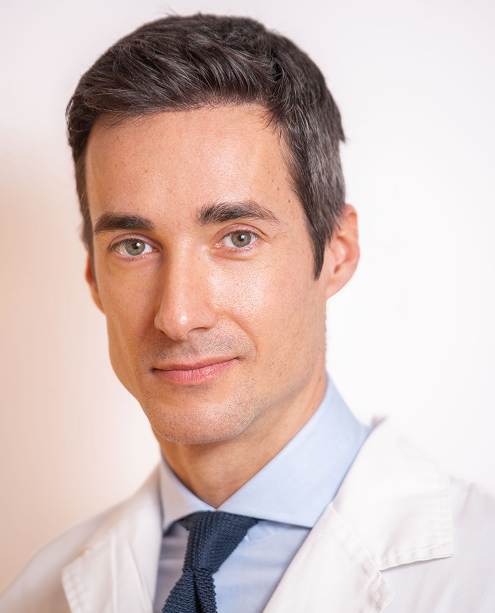
Dr Richard Fakin is a Swiss-Italian plastic surgeon specialising in plastic, reconstructive and cosmetic surgery. His career includes experience in genital surgery and gender-affirming procedures, combining personalised planning, surgical technique and aftercare.
In this type of consultation, discretion is an essential part of the care provided. The aim is not to compare the patient with a standard, but to understand their concerns, carry out an anatomical assessment and determine whether there is a reasonable indication.
It may also be useful to know the patient testimonials, although another person’s experience is never a substitute for a medical examination, nor does it allow us to predict an individual’s outcome.
Frequently asked questions about penis lengthening and thickening
Does the lengthening procedure also increase the length during an erection?
Does the fat used for augmentation last forever?
Is there any loss of sensation after the operation?
When can you resume sexual activity?
Is it possible to combine lengthening and thickening in a single procedure?
Penis enlargement surgery with a personalised assessment
Lengthening can improve visible length through the controlled release of the suspensory ligament, whilst augmentation using the patient’s own fat aims to increase girth. Both techniques can be combined in selected patients, but their results and recovery times differ.
The decision should be based on anatomy, measurements, personal goals and a clear explanation of what can be expected in each case.
This content is for information purposes only and is not a substitute for an individual medical assessment.