A buttock augmentation can be performed using the patient’s own fat, implants or a combination of both techniques. The choice depends not only on the desired volume, but also on the patient’s anatomy, the initial shape of the buttocks, the amount of fat available and the proportions between the waist, hips and buttocks.
Whilst fat transfer allows fat from other areas of the body to be used to reshape the figure, implants can provide a more defined projection when there is insufficient donor tissue. In some patients, a combined technique can help to incorporate both options into a single treatment plan.
On the page dedicated to the buttock augmentation General information on the procedures carried out at Dr Richard Fakin’s clinics in Madrid and Zurich is available.
Body reshaping requires planning
The result does not depend solely on increasing volume. The ratio between the waist, hips and buttocks, as well as anatomy and recovery time, must be taken into account before choosing a technique.
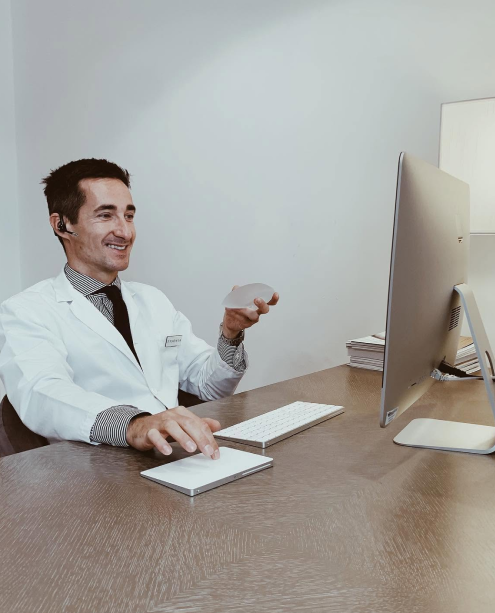
In this reel, Dr Richard Fakin explains why body treatments should be planned in advance, based on medical judgement and realistic expectations.
What are the possible aims of a buttock augmentation?
Buttock augmentation does not necessarily have to result in a dramatic change. In many cases, the aim is to improve the shape, create a moderate curve or achieve a more harmonious transition between the waist, hips and the back of the body.
Planning can focus on various aspects:
- Increase the observed profile projection.
- To increase volume in the upper or central part of the buttocks.
- Smooth out any indentations or asymmetries on the sides.
- Define the waistline using liposuction.
- Improve the transition between the hips and the buttocks.
- To achieve a more proportionate overall figure.
Two people seeking a similar change may require different procedures. The amount of body fat, the thickness of the tissues and the initial shape of the buttocks determine which techniques may be considered.
Buttock augmentation using the patient’s own fat
Gluteal fat transfer involves removing fat from one or more areas using liposuction, processing it and transferring it to the buttocks or, where appropriate, to the hips.
Donor sites may include the abdomen, flanks, back or thighs. The choice depends on where there is sufficient tissue and on how liposuction can help to improve body contour.
This technique shares the principles of the Body lipofilling using the patient’s own fat, although transfer to the buttocks requires specific planning and safety measures.
What are the benefits of using one’s own fat?
One of its main features is that it can be used both on the area receiving the fat and on areas treated by liposuction. Reducing volume around the waist or flanks can alter the appearance of the buttocks, even if the increase is only moderate.
Fat also allows volume to be distributed selectively. It can be used to enhance specific contours, smooth out transitions or address minor differences between the two sides.
However, it is necessary to have sufficient donor fat. People who are very slim may not have enough tissue to achieve the volume they desire using this technique.
Does all the transferred fat remain?
No. Some of the fat may be reabsorbed during the first few months, whilst some is successfully integrated into the tissues. For this reason, the volume observed immediately after the procedure does not represent the final result.
There is also some initial swelling, both in the buttocks and in the areas where liposuction has been carried out. The results should be assessed progressively during follow-up appointments.
Fat that successfully integrates into the body can be retained in the long term, although significant changes in weight and the natural ageing process may alter its volume over time.
Buttock implants: when might they be considered?
Buttock implants may be an option when there is little fat available or when a more defined and structured contour is desired. These are prostheses specifically designed for this anatomical region.
The choice of implant does not depend solely on its size. The width of the pelvis, the thickness of the tissues, the shape of the buttocks, the quality of the skin and the desired degree of projection must also be taken into account.
Implants offer a more predictable volume because they are not subject to biological resorption. However, they do not allow for the same flexibility in distributing volume as autologous fat, and they do not reshape the waist or flanks on their own.
Where are the scars?
Implants are usually inserted via an incision made in a discreet area of the intergluteal fold. The position, length and appearance of the scar depend on the technique used and the individual’s healing process.
During the consultation, the patient should be informed of the planned location of the incision, post-operative care and the changes the scar may undergo in the months following the operation.
Autologous fat or implants: key differences
There is no single technique that is universally superior. The most appropriate option depends on each patient’s starting point, objectives and anatomical circumstances.
| Aspect | Body fat | Buttock implants |
|---|---|---|
| Materials used | The patient’s own fat | Implants designed for the buttocks |
| Donor tissue | It is necessary to have sufficient fat | It does not require body fat |
| Waist contouring | It can be carried out in conjunction with liposuction | An additional technique is required when indicated |
| Volume distribution | It helps you work on your glutes, hips and transitions | It provides a more focused beam |
| Development | Partial resorption may occur | The implant is not resorbed |
| Scars | Small incisions for liposuction and infiltration | Incision in the intergluteal region |
| When can it be assessed? | When there is sufficient fat and the aim is to reshape several areas | When there is little fat or greater projection is desired |
Not all glutes require the same technique
In this reel, Dr Richard Fakin explains why buttock augmentation should not focus solely on achieving greater volume. Anatomy, body proportions and the degree of projection help to determine whether implants, autologous fat or a combination of techniques should be considered.
Can implants and autologous fat be combined?
In certain patients, a combined technique may be considered. The implant can provide a more defined central projection, whilst fat can be used to soften the edges, improve transitions and add volume to the lateral areas.
This combination can be useful when you are looking to achieve a certain shape that cannot be achieved using only the available fat, but you also wish to reshape your waist or improve the contour of your hips.
It should not be considered as a matter of course. Combining procedures increases the complexity of the operation, and it is necessary to justify the benefits of each technique.
Buttock augmentation in trans women and body feminisation
For trans women, buttock augmentation can form part of a broader plan for body feminisation procedures. The aim need not be limited to adding volume; it can also involve creating a more curved transition between the waist, hips and buttocks.
There is no single anatomy or body proportion that all trans women must conform to. Pelvic width, torso length, fat distribution, muscle development and skin quality differ from person to person.
During the planning stage, the following may be considered:
- The definition and position of the waist.
- The volume available at the hips.
- The initial projection of the buttocks.
- The distribution of body fat.
- The changes caused by hormone treatment.
- The presence of lateral depressions or asymmetries.
- The patient’s preferences regarding shape and projection.
- The possibility of combining the procedure with other body treatments.
Hormone treatment can gradually alter fat distribution, but its effect varies and does not, on its own, determine which procedure should be carried out.
Planning must take individual characteristics into account and avoid imposing a single model of femininity. The aim is to achieve a well-proportioned silhouette that is consistent with the patient’s preferences and the possibilities offered by her anatomy.
What results can be expected?
The results depend on the technique used and the starting point. Autologous fat can simultaneously improve the areas treated with liposuction and enhance the volume of the buttocks. Implants can provide a more defined projection when there is little donor tissue available.
In a fat transfer procedure, the initial volume changes as the swelling subsides and partial reabsorption occurs. The final result should not be assessed immediately after the operation.
With implants, the volume is more stable, but the shape also changes as the tissues heal and adapt. The final appearance depends on the position of the implant, the tissue covering it and the surrounding anatomy.
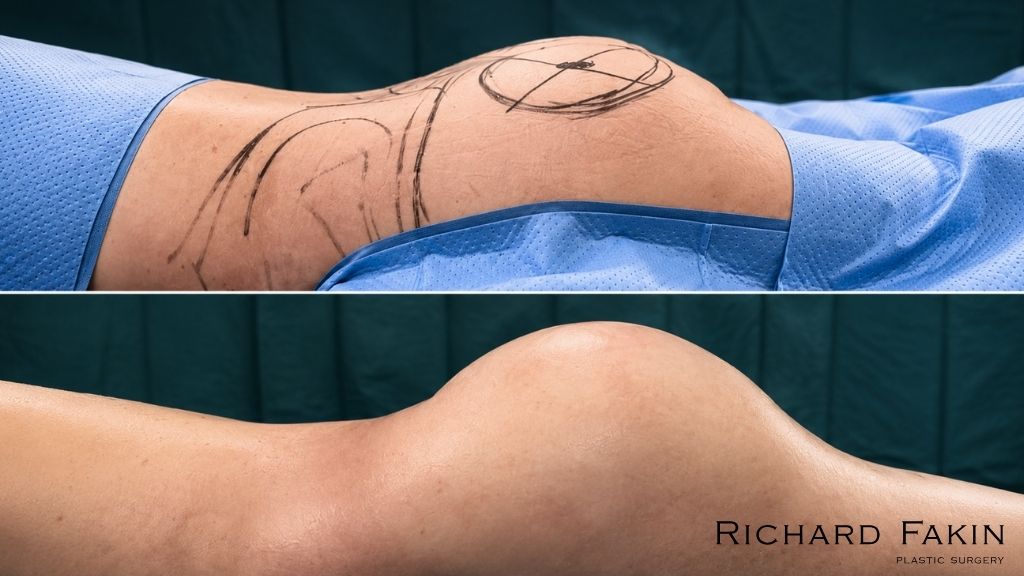
Before-and-after photographs should be interpreted with caution. Posture, lighting, angle and the stage of recovery can all affect how the result is perceived. Furthermore, another person’s case does not allow us to predict an individual’s outcome.
Recovery following a buttock augmentation
Recovery depends on whether lipotransfer, implant surgery or a combined technique has been performed. It is also influenced by the areas treated by liposuction, the patient’s work activities and their individual response.
During the first few days, you may experience swelling, bruising, a feeling of tightness and discomfort in the buttocks or donor areas. The medical team will provide guidance on hygiene, mobility, compression garments, rest and medication.
Direct pressure and sitting position
Following a fat transfer, it is usually necessary to limit direct pressure on the buttocks for the period recommended by the medical team. The way you sit and sleep can be adjusted to protect the tissue whilst it begins to integrate.
After having implants fitted, certain positions, exertion and movements should also be avoided during the initial healing phase. The recommendations are not the same for all techniques.
Back to work and sport
A return to work depends on the type of job. A job that involves sitting for many hours may require different adjustments to one that involves physical exertion.
Sport should be resumed gradually and only after receiving the go-ahead following check-ups. A reduction in discomfort does not mean that the tissues have fully healed.
Safety and potential limitations
A buttock augmentation is a surgical procedure and should only be carried out after assessing the patient’s general state of health, medication, medical history and any factors that may affect healing.
With fat transfer, there may be partial reabsorption, irregularities or asymmetries. Implants may give rise to complications relating to scarring, infection, the position of the prosthesis or the need for subsequent revision surgery.
Gluteal fat transfer also requires specific safety protocols. The choice of surgeon, the surgical setting and post-operative follow-up are essential elements of the procedure.
An individual assessment makes it possible to explain the benefits, limitations and payback period of each option before a decision is made.
Buttock augmentation with Dr Richard Fakin in Madrid and Zurich
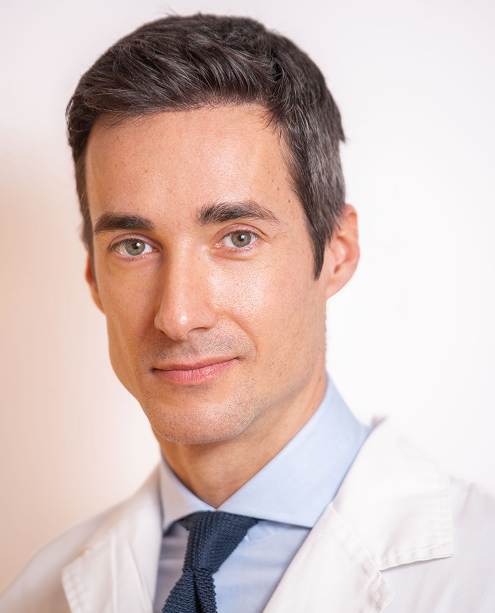
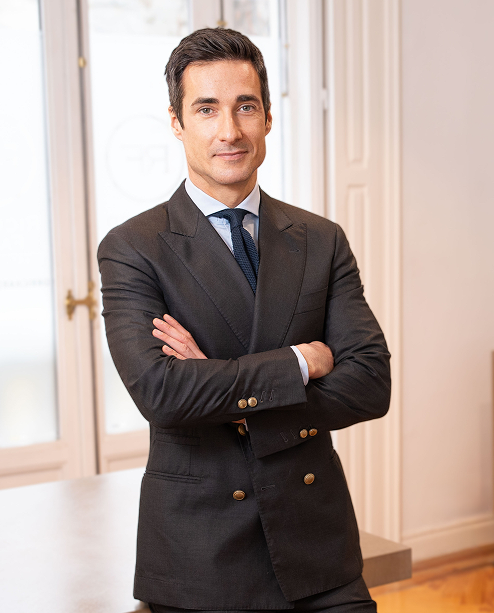
The Dr. Richard Fakin He is a Swiss-Italian plastic surgeon specialising in plastic, reconstructive and cosmetic surgery, as well as gender-affirming procedures.
At its clinics in Madrid and Zurich, treatment plans are tailored to each individual. The consultation allows for an assessment of body proportions, the amount of available fat, the desired projection and the differences between implants, fat transfer and combined techniques.
The assessment also helps to explain scarring, recovery times and the outcomes that can be considered realistic given the patient’s anatomy.
The Testimonials from Dr Richard Fakin’s patients They provide an insight into the clinic’s approach to patient support, although another person’s experience is no substitute for an individual medical assessment.
Frequently asked questions about buttock augmentation for trans women
Which option gives the most natural-looking result?
Can I have fat transfer if I don’t have much fat?
How long do the results of autologous fat transfer last?
Can the volume of the hips be increased as well?
Can implants and fat be combined in the same operation?
Buttock augmentation with a personalised assessment
The choice between using the patient’s own fat, implants or a combined technique depends on the patient’s anatomy, the amount of tissue available, the desired projection and the ratio between the waist, hips and buttocks.
A consultation with Dr Richard Fakin’s team will help you understand what options are available and the outcomes, recovery and limitations associated with each alternative.
This content is for information purposes only and is not a substitute for an individual medical assessment.