A buccal fat removal is a cosmetic facial procedure that involves reducing the Bichat bags, which are accumulations of fat located on the inner side of the cheeks. This procedure can help to slim the face, accentuate the cheekbones and achieve a more defined and elegant facial appearance.
Although it is often presented as a straightforward procedure, a buccal fat removal is not suitable for everyone. The outcome depends on facial anatomy, the natural volume of the cheeks, the patient’s age and the overall harmony of the face. Therefore, before proceeding, it is essential to assess whether it can genuinely improve facial proportions or whether, on the contrary, it might result in an overly sunken appearance over time.
The aim of buccal fat removal should not be to “hollow out” the face, but to achieve a subtle, balanced and natural contour.
What is a buccal fat removal?
A buccal fat removal is a procedure that allows for the partial reduction of the Bichat bags, also known as Bichat balls. These fatty structures are located deep within the cheeks and can give the middle and lower thirds of the face a rounder appearance.
When there is excess volume in this area, the face may appear wider, less defined or with less pronounced facial contours. In such cases, removing a controlled amount of fat can help to slim down the cheek area and make the cheekbones appear more defined.
However, Bichat’s fat pads are a normal part of the facial anatomy. They do not always need to be removed, and removing too much can disrupt facial harmony. For this reason, the decision should always be tailored to the individual.
How is a buccal fat removal carried out?
A buccal fat pad removal is performed from inside the mouth, so it leaves no visible scars on the skin. The procedure is usually carried out under local anaesthetic via a small incision in the oral mucosa, measuring approximately half a centimetre.
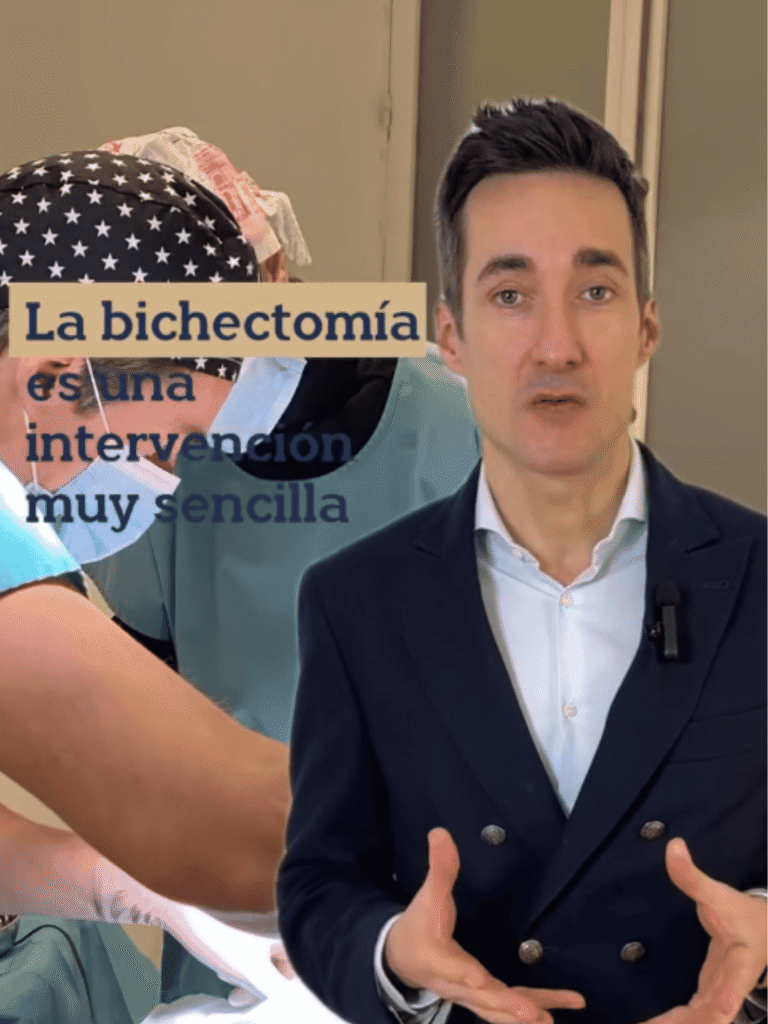
Through this incision, the surgeon locates the Bichat pad and removes a controlled amount of fat from each side. As Dr Richard Fakin explains in the following video, in many cases around 3 or 4 ml of fat is removed from each side, avoiding excessive removal. The aim is not to remove all the volume from the cheek, but to achieve a proportionate reduction that helps to define the face without losing its natural appearance.
Once the necessary fat has been removed, the incision is closed with a stitch. As the procedure is carried out inside the mouth, there are no visible external scars. During the first few days, swelling may occur in the cheek area, which usually improves gradually.
The key to the procedure lies in precision and correct indication: it is not a question of removing as much fat as possible, but of assessing how much volume should be reduced based on each patient’s facial anatomy.
Who is a bichectomy suitable for?
A buccal fat removal procedure may be recommended for patients with round faces, very full cheeks or a lack of definition around the cheekbones and facial contours. It may also be an option for people who wish to achieve a more slender, defined or elegant face, provided their anatomy allows it. In general, it may be considered for patients who present with:
- A rounded face or one with excess volume in the cheeks.
- Cheekbones that are not very defined due to a build-up of fat in the mid-face area.
- I would like to subtly contour my cheeks.
- Good skin quality and well-proportioned facial features.
- Realistic expectations regarding the outcome.
However, not everyone is a suitable candidate. If the patient already has a narrow face, little facial fat or a tendency to lose volume, a buccal fat removal may not be advisable. In such cases, removing fat from the cheeks could make the face look too thin, tired or aged over time.
Removing Bichat pads to slim the face and define the cheekbones
One of the most common reasons why patients seek a buccal fat removal is the desire to slim down their face. However, it is important to understand that this operation does not alter the entire facial structure, nor is it a substitute for weight loss.
A buccal fat removal procedure targets a specific area: the deep fat of the cheeks. By reducing this volume, it can create a visual effect of greater definition in the face, particularly around the cheekbones and the mid-face.
In patients with rounded cheeks, the change can be particularly flattering, as the face takes on a more defined contour. Conversely, in patients with little facial fat, the result may be too pronounced or look unnatural.
That is why the key lies in the preliminary assessment. The surgeon must determine whether the volume of the cheek actually originates from the Bichat fat pads or is due to other factors, such as bone structure, body weight, fluid retention or the overall distribution of facial tissues.
Bichectomy and facial feminisation
In certain selected cases, buccal fat removal may form part of a facial harmonisation plan or facial feminization. By reducing the volume of the cheeks and enhancing the definition of the cheekbones, it can help to create a more slender and delicate face.
However, it should not be understood as a procedure that feminises the face on its own. Facial feminisation usually requires a comprehensive assessment of the face’s proportions, including the forehead, chin, jawline, cheekbones and other features that influence how the face is perceived.
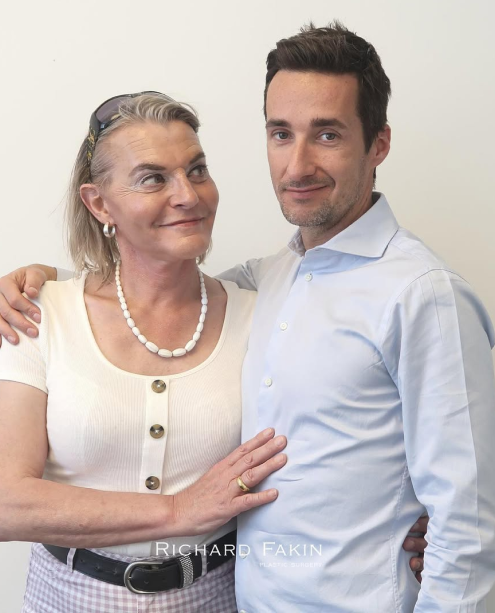
In one of the cases discussed by Dr Richard Fakin on his Instagram account, buccal fat removal forms part of a broader process of facial feminisation, alongside other procedures such as forehead lift and chin augmentation. In this context, buccal fat removal can serve as a complementary technique to enhance the harmony of the final result.
What is the post-operative recovery like after a buccal fat pad removal?
A buccal fat removal is an outpatient procedure. This means that, in most cases, the patient can return home on the same day as the procedure, provided they follow the relevant medical instructions. During the first few days, it is normal to experience swelling in the cheek area, some discomfort when speaking or chewing, and a feeling of tightness inside the cheeks. These symptoms are usually mild and can be managed with the medication prescribed by the surgeon.
According to Dr Richard Fakin, the post-operative recovery is usually quick and the initial swelling can improve significantly within the first 10 days or so. However, the final result is not immediately apparent, as the tissues need time to settle and adapt.
During recovery, it is important to maintain good oral hygiene, follow a suitable diet during the first few days and avoid touching the incision site. You should also follow all the medical team’s advice to reduce the risk of infection or prolonged inflammation.
Can a buccal fat removal leave the face looking sunken?
This is one of the most important questions to ask before undergoing a buccal fat removal. The answer is that it can happen if the surgery is performed on a patient who is not a suitable candidate or if too much fat is removed.
The face changes with age. As time goes by, many people naturally lose facial volume. If too much fat has been removed from the cheeks, this loss of volume can become more noticeable and result in a more sunken, tired or aged appearance.
For this reason, the approach must be conservative and personalised. Bichectomy is not about removing as much fat as possible, but rather about removing only the right amount to improve facial definition without compromising the face’s future harmony.
In facial surgery, less is often more. An elegant result is usually one that improves the proportions without the procedure being obvious.
Bichectomy in Madrid with Dr Richard Fakin
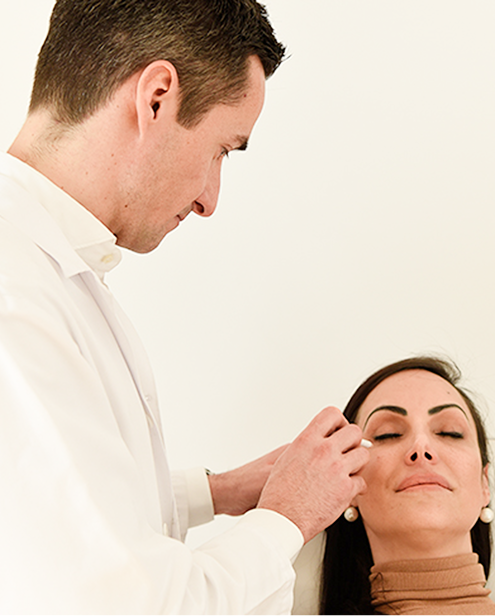
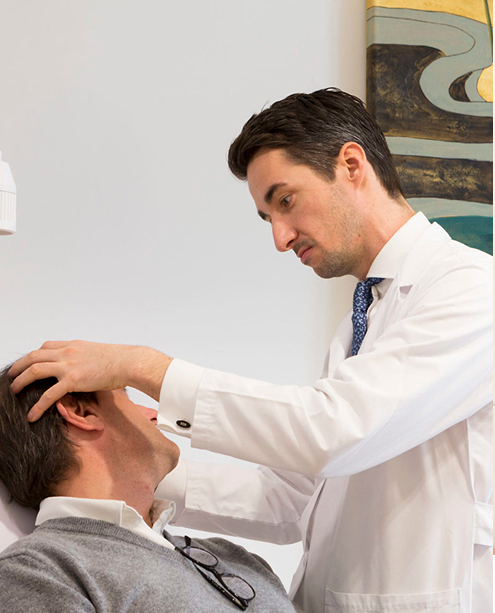
Dr Richard Fakin carries out a personalised assessment of each patient before recommending a buccal fat removal procedure. The aim is to analyse the facial structure, the volume of the cheeks, the definition of the cheekbones and the overall harmony of the face to determine whether this surgery can offer a real benefit.
In some patients, buccal fat removal can be performed as a stand-alone procedure. In others, it may form part of a broader plan for facial harmonisation, cosmetic facial surgery or facial feminisation, and may be combined with other procedures depending on the individual needs of each case.
The priority is to achieve a natural, proportionate result that is consistent with each patient’s anatomy.
Frequently asked questions about buccal fat removal
Does a buccal fat removal leave a visible scar?
Does a buccal fat removal procedure hurt?
When can I get back to my normal routine after a buccal fat removal?
When does the swelling go down after a buccal fat removal?
Does buccal fat removal help to slim the face?
Is a buccal fat removal procedure permanent?
Personalised assessment
If you are considering a buccal fat removal, the first step is to assess your individual case. It is not just a matter of slimming the face, but of understanding whether this surgery can genuinely improve the harmony of your facial features.
Dr Richard Fakin will assess your facial proportions, your goals and the most suitable treatment option to achieve a natural, elegant and safe result.